Work Well, Play Well, Be Well: Inside The Bermuda Club with Scott Morris
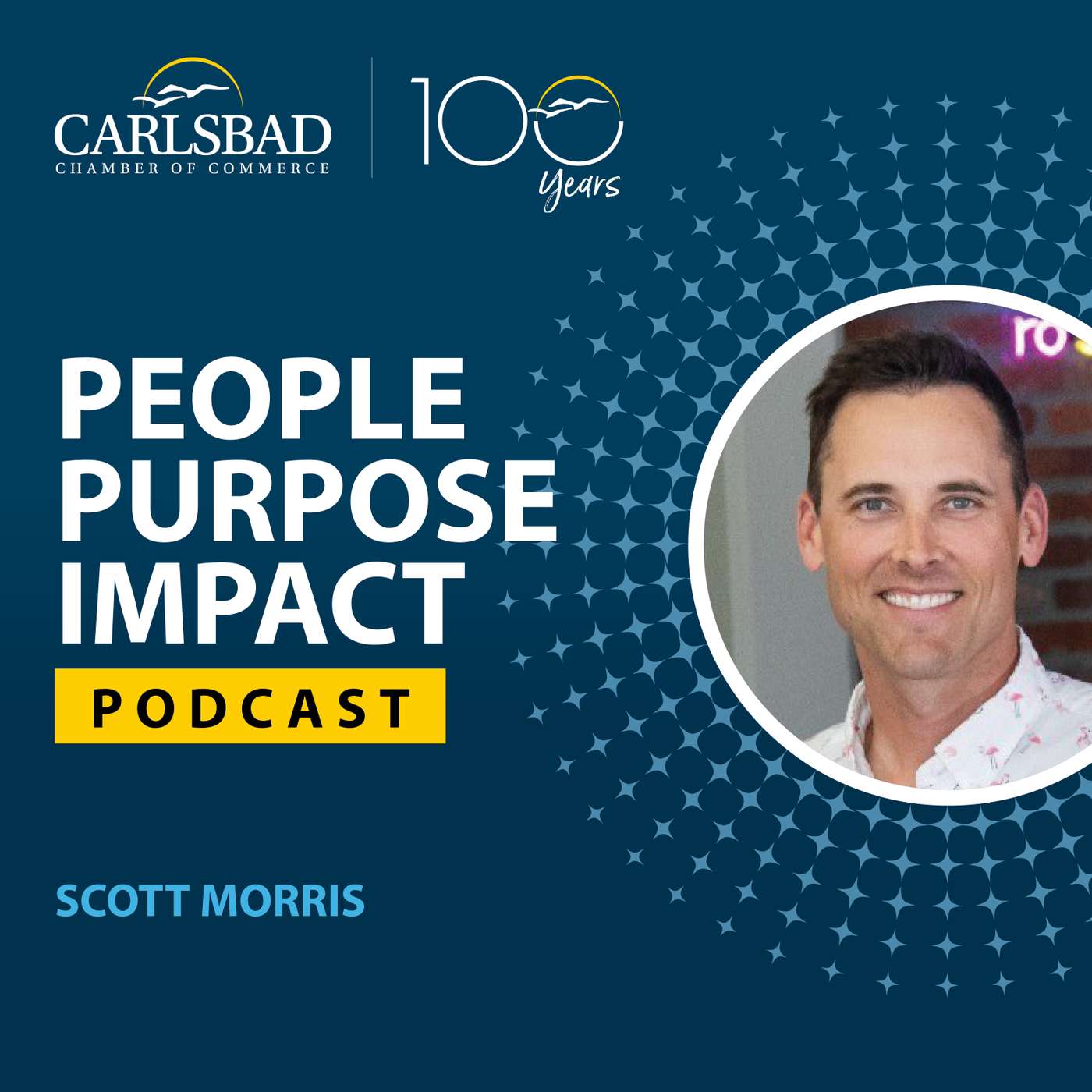


In this episode, host Bret Schanzenbach, President & CEO of the Carlsbad Chamber of Commerce, sits down with Scott Morris, local Encinitas native, serial entrepreneur, and co-founder/general partner of The Bermuda Club.
Scott traces his journey from La Costa Canyon High School to UCLA and the University of Chicago Law School, then into big-firm life at Latham & Watkins during the 2008 financial crisis. When litigation work dried up, he leaned into his entrepreneurial side, leaving the firm to build Rochambeau, a fun, flexible, kid-proof eyewear brand that has expanded into kids’ prescription eyewear, including a Blippi-branded line. He also recounts co-founding Detroit City Distillery with friends from law school.
From there, Scott explains how his love of business building and community evolved into The Bermuda Club, a private-membership space in Carlsbad designed around his mantra “Work well, play well, be well.” The club combines:
- Coworking: Coffee-shop-style open workspaces, private offices, and phone booths
- Wellness: Gym, custom sauna, cold plunges, and on-site trainers and wellness partners
- Social & Play: Four Full Swing golf simulators, putting greens, events, and member-driven clubs
Scott and Bret highlight the organic community that has formed within the club—businesses like Low Notes canned wine operating from the space, the Triangle Traders investment club, a member-barber offering on-site cuts, and educational talks from local experts like MedHero.
They also discuss:
- The club’s membership cap of 200 and its near-full status
- Unique corporate and private events, including simulator golf scrambles and holiday parties
- Strong partnerships with Carlsbad’s golf ecosystem (Full Swing, Callaway, TravisMathew, up-and-coming putter brands)
- Plans to expand Bermuda Club locations into Sorrento Valley/Del Mar, Rancho Bernardo, and Costa Mesa, powered in part by member investors
If you’re curious about where high-energy coworking, wellness, golf, and community intersect in North County San Diego, this conversation is a must-listen.
Quotes
- “Our slogan is ‘Work well, play well, be well’—that’s The Bermuda Club in a nutshell.”
- “We thought the golf simulators would be the star, but they turned out to be the bonus. The real magic is the people.”
- “We’ve already had multiple businesses start from people who met at the club—that’s the power of community.”
- “Some members come for the golf, some for the gym, but most stay because they’ve found their people.”
- “If you’d told me a year ago we’d already be raising money for three more clubs, I’d have thought you were nuts.”
Did this episode have a special impact on you? Share how it impacted you
Carlsbad Podcast Social Links:
LinkedIn
Instagram
Facebook
X
YouTube
Sponsor: This show is sponsored and produced by DifMix Productions. To learn more about starting your own podcast, visit www.DifMix.com/podcasting
Host (Bret Schanzenbach):
Carlsbad: People, Purpose and Impact – an essential podcast for those who live, work, visit and play in Carlsbad. Good morning and welcome, everyone. My name is Bret Schanzenbach. I'm the President and CEO here at the Carlsbad Chamber of Commerce. I'm your host once again, and today I'm pleased to have with me Scott Morris. Scott is the co-founder and general partner at The Bermuda Club.
Scott Morris:
Good morning.
Host:
Good morning, Scott.
Scott:
Thanks for having me.
Host:
Actually, I think we crossed over into afternoon. Good afternoon, Scott.
Scott:
It’s irrelevant. In podcast land they can’t tell the difference, right? My morning started at 4 a.m. It feels like evening already.
Host:
Wow, that was an early start. And speaking of starts, I noticed you’re a local guy – Encinitas, La Costa Canyon?
Scott:
Yeah, proud Maverick here.
Host:
Very nice. We love the local stories when we get these La Costa Canyon and Carlsbad High School alums who come back and are making a positive impact here in their community.
Scott:
Yeah, there are a lot of us. There was a time when, post-graduation, I felt like everybody had to move. They were going to L.A., the Bay Area, New York, wherever. But it’s really cool now – I’m running into high school people all the time, more than I ever have. They’re here, they’re coming back, starting businesses, raising their families here.
Host:
Our chief of police is a La Costa Canyon grad.
Scott:
I’m not sure I knew that. She’s a Maverick.
Host:
Yeah. I have some board members who own restaurants in town who are Lancers and it’s cool. This is what we love at the Chamber.
And then I saw that you went to UCLA for political science and then the University of Chicago for law. So tell us what the plan was at that time. We’re going to come all the way forward to today, but tell us what that plan was and how you saw things at that point.
Scott:
I wish I could give you a better sense of what my plan was. I think coming out of first grade I was just on the “law school track.” My dad had an MBA, and he kind of always dissuaded my brother and me—actually I have three brothers, but my older brother and me—from pursuing the MBA path for whatever reason. He sort of regretted not going to law school.
So I just fell down that path. I thought, “I’ll take the LSAT and see how I do.” I did well and said, “All right, guess I’m going to law school.” It honestly wasn’t much more thought out than that.
I can say that now since I don’t practice law anymore. But it worked out great for me. I finished law school in 2008 and I was right on the bubble there when there was still a lot of law-firm hiring going on. I was lucky enough to be able to come back to San Diego, which was always my goal.
Host:
Nice.
Scott:
So I was at Latham & Watkins downtown. I thought I was super happy. I trained to litigate and was in the litigation department for the first three or four months. Then the housing bubble hit in February 2009 and those of us who were lucky enough to keep our jobs were pretty summarily told that we were not going to be litigators anymore.
For reasons I won’t bore you with, our litigation department—especially at the junior level—kind of evaporated, and I ended up doing more transactional work, which I was never suited for. It just wasn’t me, and I knew it wasn’t me.
But every cloud has a silver lining. It definitely spurred me to start thinking more seriously about the entrepreneurial interests I’d always had. It accelerated that.
So my wife and I started what actually got me out of the law-firm life. We started a kids-focused eyewear brand.
Host:
Wait, let me find it. It’s got a cool name – Rochambeau?
Scott:
Rochambeau, yeah, like rock-paper-scissors. About half the people know what that is and half don’t. I used to go “Rochambeau… shoot!” instead of “rock, paper, scissors, shoot.”
This podcast episode probably isn’t really about that business—although I could sit here and talk about it all day—but we still own and operate it. It’s a great lifestyle brand and it’s actually growing pretty quickly.
We pivoted from just kids’ sunglasses. Our thing is they’re all insanely flexible—it’s a specialized rubber. We make them in Italy and you just can’t break them. It evolved from sunglasses toward prescription glasses for kids.
Now we’re sort of “Warby Parker for kids,” but with a twist—literally. You can give the sunglasses or the frame a big twist.
Host:
How did that spark? What made you think of a kids-focused sunglass line?
Scott:
We started with the sunglasses side. It was one of those moments that happened at Petco Park at a Padres game—speaking of local.
My wife and I were starting a family, but we hadn’t had our first child yet. We were hanging out with a lot of friends who had kids. We were in the outfield general admission at Petco Park on a bright, sunny July day. I’m holding a four-month-old baby—which I’d never really done for long—and he’s just getting torched by the sun.
I thought, “This has to be uncomfortable for him; it’s uncomfortable for me.” He’s not wearing sunglasses, so I’m doing the hand-over-the-eyes shield thing. I asked his mom, “Do they make baby sunglasses?” I had no idea. She said, “Honestly, I don’t know.”
I always wore Ray-Ban wayfarers, so I took mine off, put them on the baby and said, “Like this, but little.” That’s all it really took.
Probably subconsciously I was also thinking of a business back in the early 2000s called Chewbeads. It was a jewelry company that made silicone jewelry moms would wear. When you’re holding your infant or toddler and they grab your necklace, they can chew on it.
My initial thought was, “A baby’s not going to keep sunglasses on all the time. They’re going to take them off and put them in their mouth.” So it should be more like a teething material. It evolved from there.
Silicone turned out not to be the right material. It took two years of going back and forth with manufacturers. I always wanted to make them in the U.S. or Italy. I focused on Italy, got lucky, found a great manufacturer who understood the novel approach we were taking.
Fast-forward 13 years and we’re still doing it.
Host:
Fantastic. I was on the website looking at it. The whole vibe is super fun. And we’re going to move on to some other fun topics of yours, but I want people to know where they can check these out.
Scott:
I appreciate that. Our website is where we do nearly all of our sales. It’s roshambo.com. If you’re in need of kids’ sunglasses, but more practically kids’ prescription eyewear, you’re not going to find a more practical solution than what we do.
Host:
I’m at a different phase of life than you are—I actually now have grandkids.
Scott:
You’re too young for that.
Host:
Thank you. I have five, five and under. As a grandparent, that’s a goldmine to go out, especially on the sunglass side, for our little ones. I’m excited to show my wife that.
Scott:
If any of them are Blippi fans, we also have the license for all Blippi eyewear. He’s a YouTube kids’ star. If you have any grandsons in particular, they might know Blippi.
Host:
Very cool. That’s great.
Now, I saw another stop along the way—or maybe tangential—teaching law at USD?
Scott:
It was teaching-adjacent. That was post-law-firm. We had started the business, but I realized quickly that I couldn’t do law-firm hours and moonlight a startup on the side.
Pretty quickly, I got a great opportunity. I joined the Career Services department at USD’s law school. They gave me an opportunity to be in the community and help get students jobs. That was really the core of what I was doing—working with some of the top students and trying to get them into the big law firms that were those prized jobs.
I got to do a bunch of seminars on professionalism skills. It was super rewarding work. I thought I’d probably be there for a year or two and it ended up being almost four years.
It definitely allowed me more time nights and weekends to get the business going—lots of running to the post office at lunch, that kind of thing. That’s what you do.
Host:
And then somewhere in there—this one I’ve got to hear—the Detroit Distillery. That’s Detroit, Michigan, right?
Scott:
Oh yeah, that Detroit.
Host:
How did that come about?
Scott:
That was via law school. I went to law school in Chicago and made one immediate very close friend there. He grew up in a little farming community outside Detroit. Over the three years I was in Chicago, I got really close with his childhood friends, who were all still in the area. They all ended up in Chicago.
At the time Detroit was suffering. We were actually at his bachelor party at a lake in a beautiful setting in Canada. The key guy was his close friend, who’s brilliant—two PhDs, one in organic chemistry from Michigan and one in spirits distilling, which was a brand-new PhD at the time.
We were sitting around and he said, “I don’t want to go work for big corporate distilling. I want to do my own thing.” Right there we decided to bootstrap a distillery in Detroit. It’s still going 12 years later.
Host:
That’s amazing. All of this to say you have some entrepreneurial spirit in your blood.
Scott:
Yeah, you could say that.
Host:
So I want to bring people forward now to The Bermuda Club. I believe your Carlsbad Bermuda Club opened in January of last year, 2024?
Scott:
That’s fair to say. We technically got the keys late in 2023 and opened the doors in January 2024, so we’ve been open almost a full year now.
Host:
Tell people what it is, because it is unique. I saw a lot of fun things online. Some of my staff have been there for events. Tell us: what is The Bermuda Club?
Scott:
You’d think by now I’d have a really good elevator pitch for it. In the best way, there isn’t a quick way to describe what we do.
I did come up with our slogan, which I’m proud of: “Work well, play well, be well.” That’s the fastest way to say it.
We’ve learned what we are over the course of being open and seeing how people use it. First and foremost, we’re probably closest to a co-work space, but we’re a co-work space with so much more to offer. It’s by no means a stuffy, traditional cowork setting.
We describe it more like coffee-shop coworking. There’s a lot of energy. We do have private quiet offices and phone booths—that’s part of it—but really it’s co-work plus social, plus a wellness component, plus we have golf simulators.
Full Swing, a local company here in Carlsbad, is our simulator partner. We have four of their simulators, so there’s a golf through-line in some respects. We thought that would be the highlight, what most people would use and be drawn to. It turns out it’s more of a great amenity.
The social and cowork pieces are really 1A and 1B. We also have a small gym. We try to be a “life hack” for everything you might want to accomplish in a day—and at the same time you’re surrounded by accomplished people, which is really the magic of the place.
It’s a private membership model. We’re capping it at 200 members, and we’re darn close to full.
Host:
I saw that.
Scott:
I think as of today we’re at about 185, so we’re very close. Once we’re full, all the attention gets to go toward the programming and building what the community is.
Host:
I want people to know some of the cool things there. You mentioned the Full Swing golf simulators—you have four. I saw putting greens, the gym. I saw a cold plunge.
Scott:
The cold plunges are a big hit. We have two—one “warm” and one cold.
Host:
How cold is a cold plunge?
Scott:
My wife is the cold-plunge person, not me, but we keep them at 44 and 40 degrees. Forty-four is the “warm” one.
Host:
Oh my goodness.
Scott:
I’m shocked how many people use them. I’m sort of a casual user. I drink the Kool-Aid on them—I get it—but I’m not the daily person. Still, they’re popular.
Host:
They’re all the rage. That’s cool. And then you have a sauna.
Scott:
We do. We started with a prefab smaller sauna that fit maybe four people comfortably. We quickly realized that wasn’t going to be enough. We hustled, took feedback seriously, and built a custom sauna that can fit 12–15 people. It’s beautiful.
Host:
So let’s just say that’s a highly amenitized coworking space.
Scott:
Yeah, and honestly the thing I’m most proud of is the community. “Community” gets thrown around a lot, but we genuinely have one in the sense that you’re there, you’re meeting new people on a daily basis.
Now that we’ve been living with it for a year, we’re seeing how it plays out. We’ve already had three or four businesses start from people who met at the club. I love that. We’ve had clubs within the club organically form.
One example is what we call Triangle Traders—it’s The Bermuda Club’s investment club. Bermuda Triangle—Triangle Traders.
Host:
Love it.
Scott:
That popped up organically and is run by members. They meet weekly. Every other week it’s more social: “Come on in for a happy hour, bring your favorite beverage, let’s get to know each other,” because we’re always adding new members.
On the alternating weeks it’s more programmatic. They’ll have incredible guests come through. We had one of the co-founders of CFS come and give a talk about that whole process. We’ve had incredible business leaders.
We had an accountant in our orbit come in and do a tax talk about the big new bill and what implications it has on small-business and personal taxes.
We’re also leaning into the health component. We’re learning who’s in our orbit and how to leverage that for their benefit and our members’ benefit. One of the founders of MedHero, not far down the street, is in the club. He gives wellness talks and offers discounts for his services.
Every day we’re learning about a new person who owns a business or has expertise that helps the community.
We have a little barber chair in there that came up because a member cuts hair. He said, “Hey, I could do this on site. If you set up a chair, I’ll hold office hours a couple times a week.” Another life hack for people. So we converted a closet into a little salon.
Host:
It’s fun to hear how it’s evolving. Before we turned the mics on, we talked about some of the businesses that have incubated there. Share a couple of those stories. I know our listeners can’t see some of the fun stuff you brought, but I can.
Scott:
I could do sound effects popping a can, but one example is called Low Notes—canned wine.
The two founders became members—that’s where I met them, just giving a tour. They told me what they do. Their business had literally just started, months before. They’re both sommeliers with incredible sales backgrounds. They found this hole in the market for quick-service restaurants that wanted really good canned wine.
They looked around at what we were doing and said, “Yes, the energy of this place speaks to our brand.” They’re a small-footprint operation, so now they basically run their whole business out of our club. They’re there all the time.
If you go around town now and see Low Notes cans, they’re in places like Oggi’s and Brews, and that came from connections at The Bermuda Club.
Host:
That’s awesome.
Scott:
They have placements all over town just from, “Hey, I know the guy who runs this restaurant,” or, “I know the owner at Wahoo’s.” Now they’re in all the Wahoo’s. It’s crazy.
Joining the club isn’t definitely going to accelerate everyone’s business, but you never know. The power of the networking we’re seeing in there is huge.
For some people, they come to the club because they want to hit golf balls, and that’s great. Some people want to cut their expensive Equinox membership and have a more refined experience, get access to our trainer and use our gym facilities. They might work two hours in the morning, use the gym, and head out.
But for most people, you get in there for one reason, and then the “stickiness” is, “Oh my gosh, these people are now my friends. This person has helped my business in this way. I’m helping this person’s business in that way. I have a new golf buddy.”
I was introduced to padel there. I didn’t even know what it was—the new racquet-sport rage.
Host:
I’ve never heard of it. Is it related to pickleball?
Scott:
It’s a cousin of pickleball. It’s the love child of pickleball, tennis and racquetball—half-glassed-in courts. One of our members is super into it, plays international tournaments, and brought a bunch of us to try padel. You never know what you’re going to run into.
Host:
That’s fun. I know you mentioned you have content and programs there, which is great. But you also do private events—people can rent your space, right?
Scott:
Yeah, absolutely. We’re very cognizant of not watering down the member experience.
What we’ve discovered is that the space gets used during the workday regularly. If we went over there right now, middle of the workday on a Friday, there’d be people working. There wouldn’t be too much golf going on, maybe a little, but by the time 5 or 6 p.m. rolls around, the place is dead quiet.
I think that speaks to who we’re attracting. Our age range varies widely—our youngest member is around 21 or 22, which is amazing. If you have the foresight to put yourself around our member base at that age, that’s powerful.
We also have retirees who want a vibrant place to hang out and be around younger people doing cool things—some into their seventies.
But for the most part, people are going home to their families at 4 or 5 p.m., so it gets quiet. That gives us an opportunity to leverage the space when it’s empty.
We don’t host events constantly, but outside organizations can absolutely use it. In my opinion, it’s the most unique event venue in town. We can run scramble tournaments for you—catered simulator scrambles with fun rules. We host charity poker, corporate events—you name it.
Host:
When you say scramble, you’re talking golf?
Scott:
Golf, yeah. A simulator-golf scramble. The Full Swing simulators are incredible.
Again, the power of Carlsbad—we’re in golf Mecca. Full Swing is about a mile and a half from our front door, and funny enough, about a half-mile from where we are right now.
We get all the beta-test stuff no one else gets access to. To the point that when we identify something we’d like as a feature, we tell them and they roll it out. We’ve made changes to the Full Swing software based on how we’re using it. We’re an interesting test case.
Callaway comes in and does club fittings for our members at the space and gives our members 25% discounts. We get 50% off TravisMathew gear. EvenRoll, an up-and-coming putter brand based here, sponsors our putting green. Another member-owned business, Bloodline Putters, is in the club.
Their concept is that the putter will stand on its own as you line up your putt. You stand it up, step away, and look at your line so you can manually correct it. Very interesting concept.
Host:
There could be hope for some of us.
Scott:
There could be. The funny thing is I don’t even play golf—at least I didn’t. I’m starting to be dangerous enough as a simulator golfer. It’s a slightly different thing.
We’re proud of the events we’ve hosted. The Carlsbad PD has held their holiday party with us and they’re coming back this year. We like to do as many civic and charity events as we can. Sometimes we do charity things on the house, especially as we get the word out.
For corporate events, you won’t find a more unique space.
Host:
That’s wonderful. Looking at your website—I believe it was your website or maybe LinkedIn—growth is on the horizon.
Scott:
Yeah. My wife is not thrilled about that, but we are. It’s gone so well. We’ve been acquiring members at a faster pace than we predicted, and the enthusiasm from the member base has accelerated our wildest hopes of expansion.
We hit “go” on a new fundraise we’re in the midst of, and the plan is three more locations. Two more in San Diego County—we have two spaces we’re on the one-yard line with. One will be further south in the Sorrento Valley/Del Mar area. Another we’re targeting is Rancho Bernardo. Then we’ll hopefully head up to Costa Mesa to start spreading out that way.
If you had told me a year ago that by this time we’d be looking at expansion, I’d have thought you were nuts. But it’s going great.
It really speaks to the power of what we’re doing because we have several members who are so enthusiastic about their experience that they’re now invested in the next round. That’s really how the discussions started—members asking us, “When are you opening more?”
We’d say, “It’s in the plan, but we don’t have a hard target.” At one of those investment-club meetings we said, “Why don’t we put together a soft pitch and see if members are interested?” We had dozens of members show interest and actually put their money into the fund. So, we’re doing this.
Host:
That’s so great. By the time this episode comes out, the Carlsbad club might be full on members. By the end of the year you might be completely full.
Just in case it is, the website is bermudaclubs.com.
Scott:
Yep, bermudaclubs.com. I’d like to say I was forward-thinking with the plural, but that was just the domain that was available.
Host:
I saw that before I even knew about the expansions—I’m like, “Oh, it’s got a plural.”
Scott:
It’s all about what website is available. You take what URLs you can grab.
Host:
That’s awesome. You mentioned earlier you and your wife starting a family. I think I saw a couple of cute little girls you have now.
Scott:
Yeah, they both just had birthdays—12 and 9.
Host:
Time goes by.
Scott:
It sure does.
Host:
Those are fun ages though.
Scott:
They are. I’ve been very lucky. Not being tied to a legal desk job for the last ten years has given me a ton of opportunity to be super present, especially when they were much younger—being softball dad and all that.
Host:
Twelve and nine—that’s about sixth and third grade?
Scott:
You nailed it.
Host:
That’s awesome. Well, thank you so much for taking the time to come down. We love having you guys as part of our Chamber, part of our family, and we look forward to collaborating with you in the future and beyond.
Scott:
I think we should have a look around after this.
Host:
We should, yes, absolutely.
Scott:
Thanks. My pleasure. I appreciate it.
Host:
Thanks for joining us today on our Carlsbad: People, Purpose and Impact podcast. If you got value out of our episode today, please hit the follow button on your favorite podcast app, and please tell a friend. Can’t wait to see you next time on Carlsbad: People, Purpose and Impact.
