The Future of Senior Care in North County with Liam Dunfey of Assisting Hands
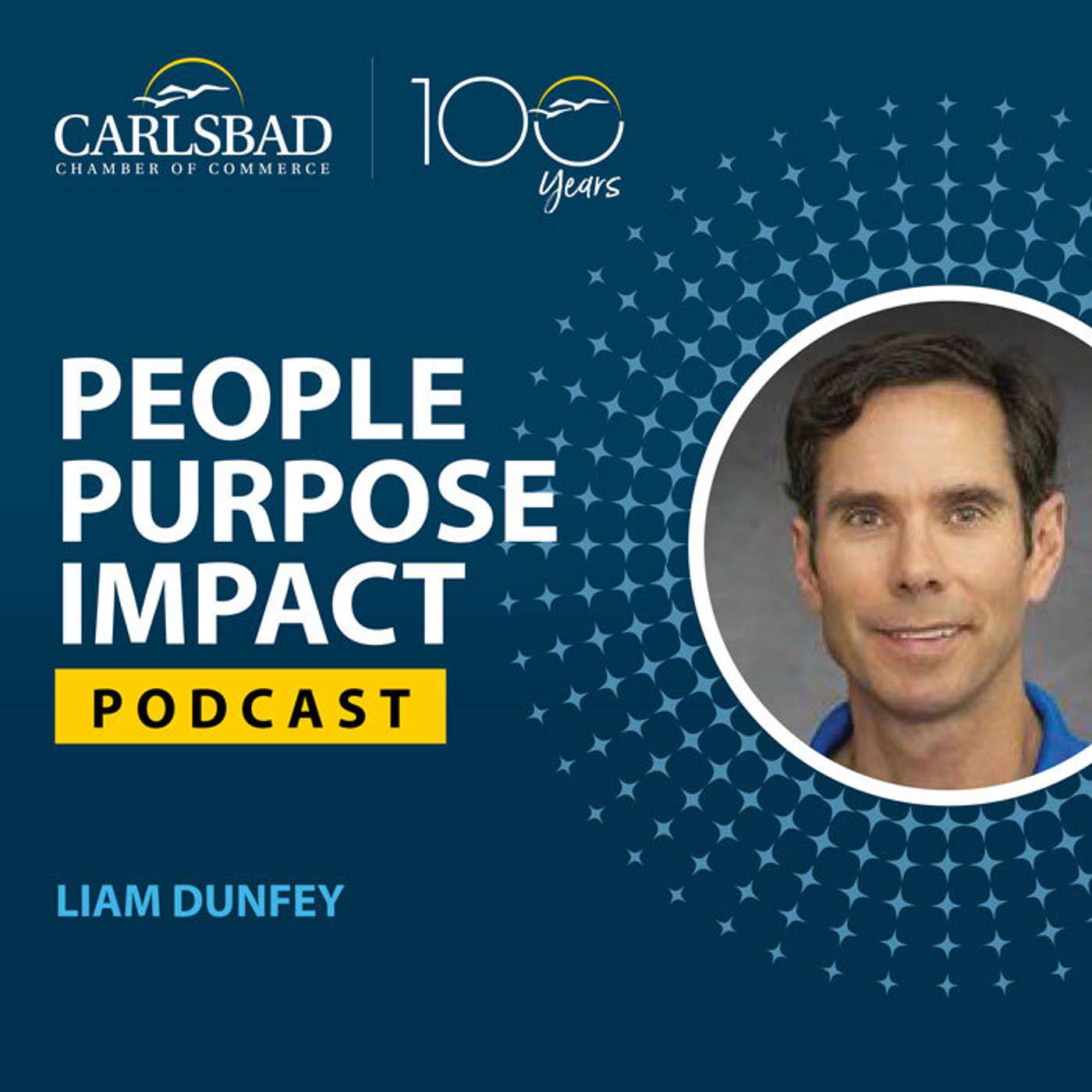






In this episode of Carlsbad: People, Purpose and Impact, Bret Schanzenbach welcomes Liam Dunfey, President of Assisting Hands of Carlsbad, for a thoughtful conversation about aging, caregiving, and the resources available to families across North County.
Liam shares his journey from Massachusetts to California and how a career in fundraising and healthcare led him into the aging services field. After 15 years of working with older adults in a variety of leadership roles, he made the leap into business ownership to help more seniors remain safely and comfortably in their homes.
Together, Bret and Liam discuss what non-medical home care really means, why companionship is such an important part of caregiving, and how services like help with bathing, dressing, grooming, and medication reminders can preserve dignity and quality of life for older adults.
They also talk about common myths surrounding hospice, the emotional realities families face when dementia and Alzheimer’s enter the picture, and how many people are unaware of the local, state, federal, and veteran-related resources that may be available to help.
This episode is a valuable listen for anyone caring for aging parents, planning ahead for a loved one, or simply wanting to better understand the growing senior care landscape in Carlsbad and beyond.
🎧 Listen now on Spotify, Apple Podcasts, or wherever you get your shows!
Did this episode have a special impact on you? Share how it impacted you
Carlsbad Podcast Social Links:
LinkedIn
Instagram
Facebook
X
YouTube
Sponsor: This show is sponsored and produced by DifMix Productions. To learn more about starting your own podcast, visit www.DifMix.com/podcasting
Host (Bret Schanzenbach):
Carlsbad: People, Purpose and Impact is an essential podcast for those who live, work, visit, and play in Carlsbad.
Good morning and welcome, everyone. My name is Bret Schanzenbach. I’m the President and CEO of the Carlsbad Chamber of Commerce, and I’m your host today. I’m excited to have with me Liam Dunfey. Liam is the president of Assisting Hands of Carlsbad. Good morning, Liam.
Guest (Liam Dunfey):
Good morning, Bret. It’s good to be here.
Host:
It’s great to have you. Thanks for coming down. You’re not originally a West Coast guy. You’re an East Coast, Massachusetts guy. I saw that you went to Xaverian Brothers High School.
Guest:
That’s right. Xaverian is a powerhouse sports school in Massachusetts and one of the premier Catholic schools in the Boston metro area. I attended there in the early 1990s. I went back recently because one of my classmates is now the headmaster, and the whole facility looks like a college campus. It has grown exponentially over the last 30 years.
Host:
Then you went on to college on the East Coast and later the University of Maryland. And it looks like you’re a pretty avid Celtics and Red Sox fan.
Guest:
That is correct. I grew up a couple of miles from Fenway Park, and Celtics pride runs deep through generations of people who grew up in the Boston area.
Host:
They’re having a good season. As a lifelong Lakers fan, I was pretty much bred to be a Celtics hater, but I grew up in the Magic Johnson and Larry Bird era, which was super fun.
Guest:
Absolutely. It was one of the highlight eras for the NBA. Bird and Magic saved the game.
Host:
Before starting Assisting Hands, you were involved professionally and philanthropically in a lot of nonprofits. Tell us about your journey after college and how that eventually led you here.
Guest:
I’m a big champion for advocacy. I started my career in higher education as a fundraiser for about five years, and then I moved into healthcare. It was a good switch for a lot of reasons. At the tail end of the 2000s, during the Great Recession, I walked my resume into St. Paul’s Senior Services. Forty-eight hours later, I had an interview, and I’m very grateful for that because it introduced me to aging services.
For 15 years before buying this company, I worked in a lot of different roles, including overseeing two senior living communities. I’ve really come to enjoy working with older adults and helping family members and advocates understand all the resources available to them, not just in Carlsbad, but throughout the county, the state, and federally.
Host:
And this demographic is growing by leaps and bounds. The aging baby boomer population has really exploded the senior demographic.
Guest:
The demographics definitely support anyone considering work in the aging industry. Home care is just one component. There are many different areas where people can make a difference.
Host:
You spent 15 years in senior care, and then you made the leap into owning your own business. What made you go from enjoying the work to deciding to buy a company?
Guest:
My cousin is a commercial banker, and for the last seven years he had been talking to me at family barbecues about buying a business. He knows how passionate I am about helping older adults and how much experience I’d built over those 15 years in senior living. Eventually, he convinced me.
I had spent five years at a community in the South Bay, and I felt like I had reached my professional ceiling. About two years ago, we started crunching numbers on different opportunities, including a board-and-care community, a hospice company, and a non-medical home care company.
What I liked about home care is that there is still room for innovation. California only started licensing home care agencies about a decade ago, so I got to see what the industry looked like before and after regulation. I also wanted to become a stronger leader. I had some great leadership opportunities in those 15 years, but it felt like time for me to step into the primary leadership role.
Host:
Let’s dig into what Assisting Hands of Carlsbad actually is. You mentioned that it’s non-medical. Explain what that means.
Guest:
We’re a caregiving organization. About 95% of the people we serve are older adults in their own homes. These are often members of the baby boomer generation or the Silent Generation. People born in the 1930s and early 1940s want to stay in their homes. They’ve lived there for decades. They like their routines, their neighbors, their pets, and their familiar surroundings. They’re going to do everything they can to remain at home.
Host:
I don’t blame them. I wouldn’t want to move just because I hit a certain stage in life either.
Guest:
Exactly. About half of what we do is companion care. We’ve all heard about the loneliness epidemic, and that existed long before COVID. COVID just made it worse. Companionship is a huge part of caregiving. A good caregiver needs a personality that aligns well with the client.
The other half of our work involves helping with activities of daily living. Since we’re non-medical, we can’t administer medication, do injections, or provide wound care. Those tasks require licensed medical professionals. But we can remind clients to take medications, and we can assist with things like dressing, bathing, grooming, and incontinence care.
These are dignity-centered services. Often adult children are advocating for their parents or grandparents, but some aspects of care can be difficult or uncomfortable for family members to handle themselves. That’s where an organization like Assisting Hands can really help.
Host:
That companionship piece is so real. My wife is a hospice nurse, and even in that medical setting, so much of the work ends up being companionship.
Guest:
It really is. Hospice is a different conversation, but it’s something many of our clients will eventually need. I hope listeners understand that hospice is a Medicare benefit people have earned by paying into the system for decades. It’s typically available during the last six months of life with a physician’s approval.
A hospice nurse can’t be there 24/7, though. That’s where caregiving organizations can come alongside hospice teams and help with daily living activities and support.
Host:
There’s also a stigma around hospice, like it means someone is just being written off.
Guest:
That’s one of the big myths in aging services. I think the three biggest stigmas are: “I have to move into a facility,” “I’m going on hospice,” or “I’m so frail that I need someone in my home.” We can debunk all of those.
Home care is typically one of the first entry points into aging services. The biggest barrier is often the idea of having a stranger in your home. Some people hire private caregivers under the table, and there are pros and cons to that compared to working with a licensed agency like Assisting Hands. But ultimately, bringing someone into your home is a big step for many families.
Host:
Even if family is local, they may not be able to provide the level of help that’s needed.
Guest:
That’s exactly right. People are living longer. Most of our clients are in their late 70s through their mid-90s. Their adult children are often older themselves. I’m one of those people. My parents live in Boston, and my mom needs care right now. My dad has been her primary caregiver for years, and I’ve had some tough conversations with them recently about whether it’s time to bring in in-home support or even respite care.
There are resources available that many families don’t know about. Some senior living communities, for example, offer short-term respite stays, and a lot of seniors don’t even realize that exists.
Host:
That’s such a good point. There’s a lot out there that people just don’t know, and when they get connected with someone like you, they gain access to those resources. You’re also involved with the Chamber’s Aging Services Committee, which brings together a lot of professionals and support services.
Guest:
I really appreciate that the Chamber has an Aging Services Committee. It’s the first chamber I’ve ever encountered that has a committee dedicated to aging services and that is truly active and engaged. We meet every month, and it gives all of us in the profession a chance to learn about additional resources that are out there. Even after 17 years in the industry, I’m still learning something at every meeting.
Host:
So when people work with you, they’re not just getting home care support. They’re getting access to your broader network and knowledge.
Guest:
Exactly. When I bought this business, we had also considered buying a hospice agency. We decided not to for two reasons. First, hospice is a Medicare benefit, and Medicare controls the reimbursement rate, which can be challenging. Second, I didn’t want to work only with people at the end of life. I wanted to work with them at the beginning of their journey through aging services.
Home care is one of the main entry points into the larger aging services world. We want to be a resource not just for our own clients, but for the whole community, helping people understand available services, debunk myths, and think through how to pay for support.
Medicare and Medi-Cal don’t pay for as many things as people often assume, but there are other resources. We live in an area with a large veteran population. Some clients have long-term care insurance. There are different ways people can piece together support that ultimately provides peace of mind.
Host:
And there are veteran resources available too.
Guest:
There are. We’re currently working with the VA to get on their referral list, which is really important. When I bought the business, we had about 30 clients, and around 10% of them were veterans. I’ve met with all of them recently and introduced them to some of the benefits available through the VA.
There are a lot of myths around veteran benefits. Some people assume they make too much money to qualify, but that’s not always true. I’ve worked with clients and other veterans to explain benefits like the VA Homemaker Program and Aid and Attendance. When I worked at St. Paul’s for a decade, I helped many clients get connected to Aid and Attendance benefits.
These resources are not just for veterans themselves, but often for spouses and widowed spouses as well. They can be tremendously helpful for both in-home care and senior living.
Host:
I want to pivot to another challenging topic in aging services: dementia and Alzheimer’s. A lot of families are dealing with cognitive decline in some form. Talk to us about that and where you fit in.
Guest:
I want listeners to understand that there are different types of dementia. Alzheimer’s is the most well-known, but there are others, including frontotemporal dementia, vascular dementia, and Parkinson’s-related dementia. It’s important for someone experiencing cognitive impairment to get evaluated so families know what type they’re dealing with.
We’ve worked with clients who have some of these more complex forms of dementia. There are good community resources too. The Chamber has helped connect people with organizations like the Foundation for Senior Wellbeing and the Alzheimer’s Association, and those supports matter.
Many times, early signs show up as short-term memory issues. People may repeat themselves or ask the same questions over and over. One of the best experiences I had professionally was overseeing a day program for seniors with memory loss. It taught me a lot about what families go through while caring for someone with dementia.
I want listeners to know there are family resources available. Medicare has even introduced a pilot called the GUIDE program. Through that program, people with dementia may be eligible for respite reimbursement for caregiving services. There really are some strong resources out there for people living with dementia and for their care partners.
Host:
That’s so helpful. For someone hearing this and realizing they need to have these conversations with their family, what’s the best way to get in touch with you?
Guest:
The best place to start is our website: assistinghands.com/carlsbad. We’re a 24/7 operation, and people can call or text us any time. We have a local staff, including me, who answer those calls and texts.
We also offer complimentary assessments. A lot of times people don’t even know where to start. If someone has a family member they’re concerned about, I’m happy to come out, meet them in their home, and do a complimentary assessment. It takes less than an hour, and we can figure out whether there’s a good fit and what kind of support might be helpful.
Host:
That’s a great way to start. And even though Carlsbad is in your name, I’m assuming you serve beyond Carlsbad.
Guest:
We do. We serve throughout the county, and we understand that people in North County often have family, friends, and neighbors elsewhere in the county. We can either serve them or help them find someone who can.
Host:
Before we wrap up, I saw you have three beautiful children. I’m assuming they’ve all been raised to be Celtics and Red Sox fans.
Guest:
They are definitely big basketball fans. We’re a basketball household. My daughter is a freshman at Our Lady of Peace, and her team just made it to the CIF semifinals, which was really exciting. She’s pretty tall, my wife is tall, and we’re excited to see where all the kids go academically first and foremost. They’re really good students and great kids.
They’re 11, 13, and 15 — Maddie, Emily, and Connor. They attend St. John Catholic School in Encinitas, and it’s been a great fit for them.
Host:
That’s wonderful. Liam, thank you so much for taking the time to come down and talk about all of this. This is such a relevant and important topic that touches so many families, and it’s only going to affect more people as this demographic continues to grow. We’re grateful to have you as part of the Chamber and part of our Aging Services Committee.
Guest:
I appreciate it. Thank you so much.
Host:
I know you’re also big into Toastmasters and doing more speaking.
Guest:
I am. I actually have a Toastmasters meeting in about an hour. I’m on the path to becoming a Distinguished Toastmaster. I was very involved with Toastmasters before we had children, and now that the kids are older, I’m getting back into it.
It’s such a great international organization. It helps people of all ages and abilities become better communicators, stronger leaders, and more self-aware. I call it getting into the laboratory. When you go to a Toastmasters meeting, it’s a chance to practice. You’re not there to be judged unless it’s a competition. It’s about improving your speaking, learning to think on your feet, evaluating speakers, cutting filler words, and using your body effectively to deliver a compelling message.
Host:
If I remember right, the fear of public speaking is one of the top fears out there.
Guest:
It absolutely is. Like any muscle, speaking is something we need to exercise. If we don’t use it, it atrophies, and we become less comfortable getting in front of groups, speaking on podcasts, or delivering a keynote.
Host:
Well again, thank you for taking the time. This has been really fun, and I’m grateful to have you as part of our chamber family. I look forward to the future.
Guest:
Thank you so much. My pleasure.
Host:
Thanks for joining us today on Carlsbad: People, Purpose and Impact. If you got value out of our episode today, please hit the follow button on your favorite podcast app, and please tell a friend. Can’t wait to see you next time on Carlsbad: People, Purpose and Impact.