Saving Community Healthcare: Tri-City, Sharp, and the New Era of North County Medicine
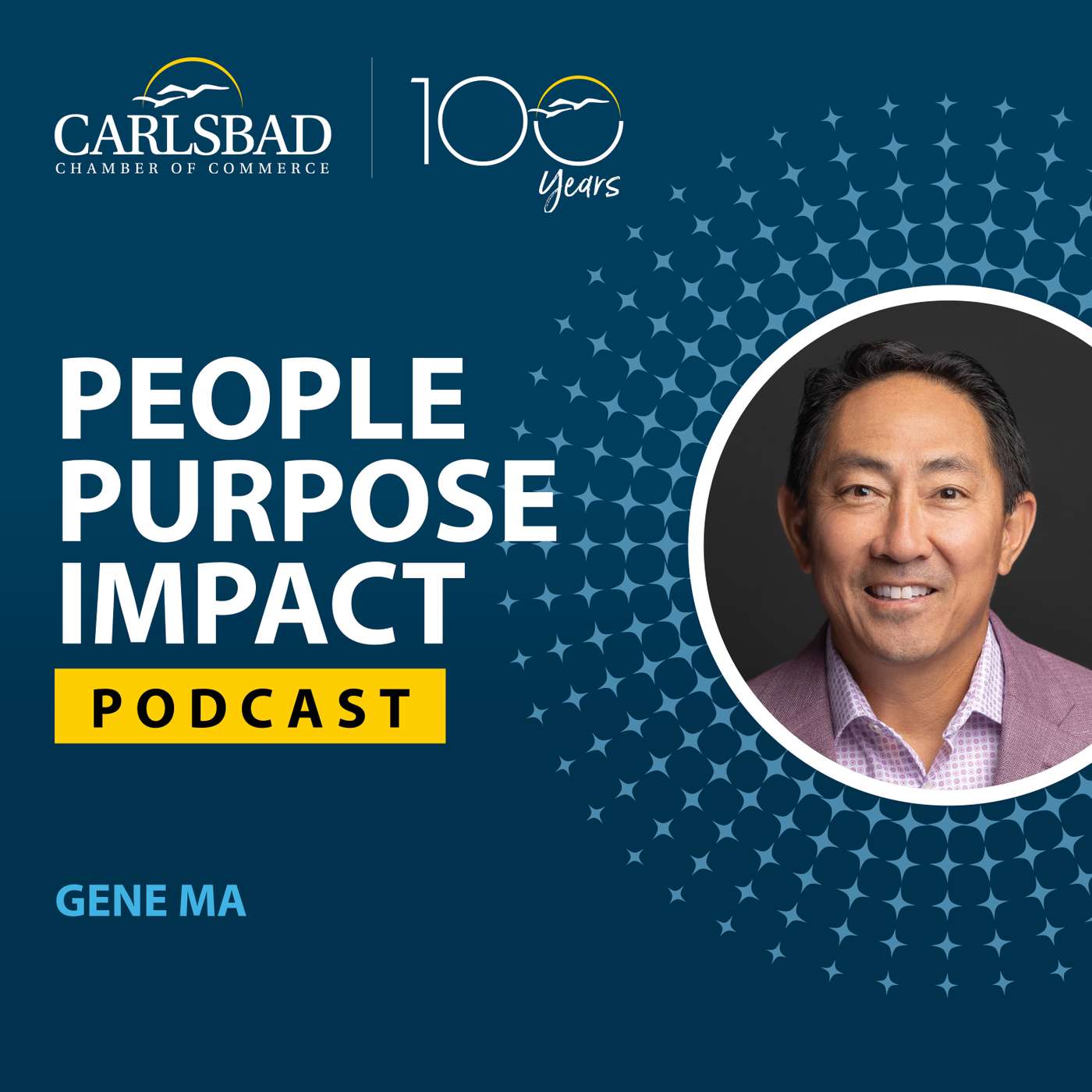


Podcast: Carlsbad: People, Purpose and Impact
Host: Bret Schanzenbach, President & CEO, Carlsbad Chamber of Commerce
Guest: Dr. Gene Ma, President & CEO, Tri-City Medical Center
In this episode, Bret welcomes Dr. Gene Ma, a long-time emergency physician and now President & CEO of Tri-City Medical Center, for a candid and hopeful conversation about the future of healthcare in North County San Diego.
Dr. Ma traces his journey from a globally mobile childhood (Hawaii, Burma, Japan, Hong Kong) to growing up in Arcadia, then on to UC Irvine, UCSF, Stanford, and UCSD, where he trained in emergency medicine. He shares what it’s really like behind the scenes in the ER, the importance of humility in medicine, and what 27 years on the front lines taught him about people, teams, and community.
Listeners will hear how Dr. Ma:
- Discovered his passion for community-based medicine at Tri-City
- Served as Chief of Staff and later Chief Medical Officer
- Led and helped grow a democratic emergency medicine group and an occupational health business
- Was honored 10 times as one of San Diego’s Top Doctors in Emergency Medicine
The conversation dives into the financial and regulatory pressures facing hospitals today, including:
- How DRG-based payments and long COVID hospital stays pushed hospitals to the brink
- The impact of underfunded Medicare and growing staffing costs
- The staggering costs of new construction and seismic compliance, with per-bed costs in the millions
- California’s 2030 (and 2033) seismic standards, and what they actually require
From there, Dr. Ma shares the transformational plan for Tri-City:
- Tri-City is entering a long-term lease and operating agreement with Sharp HealthCare
- The hospital will become Sharp Tri-City, pending voter approval in June
- The agreement brings the scale, resources, and experience of San Diego’s largest not-for-profit health system to North County
- The board’s decision, he explains, reflects a commitment to put community before titles and secure a sustainable future for the district
Dr. Ma paints an inspiring vision that includes:
- Reopening Labor & Delivery at Tri-City in partnership with Sharp Mary Birch
- Returning and expanding NICU and high-risk maternal-fetal medicine services to North County
- Developing a comprehensive cancer center on the Tri-City campus so patients can receive radiation and chemotherapy locally
- A revitalized, state-of-the-art flagship medical center that drives both better health outcomes and economic growth along the Highway 78 corridor
Bret and Dr. Ma also discuss the upcoming public vote, clarify that no new taxes are being requested, and encourage district residents to vote YES to allow Sharp to manage and invest in the hospital.
The episode closes on a personal and heartwarming note, as Dr. Ma talks about his five daughters, their life paths across California and New York, and what it’s like to transition from sideline sports dad to a new season of life.
If you care about the future of local healthcare, economic vitality, and quality of life in Carlsbad and North County San Diego, this episode of “Carlsbad: People, Purpose and Impact” is a must-listen.
Key Topics:
- Dr. Gene Ma’s global upbringing and medical training
- 27 years in emergency medicine and leadership at Tri-City
- Financial and regulatory realities of running a hospital
- COVID’s impact on hospital operations and finances
- California seismic standards and hospital infrastructure
- The long-term partnership between Tri-City and Sharp HealthCare
- Reopening Labor & Delivery and bringing high-risk maternity care back to North County
- Plans for a comprehensive cancer center on the Tri-City campus
- The importance of the upcoming community vote
- Dr. Ma’s family and life in North County
Call to Action:
Be sure to follow “Carlsbad: People, Purpose and Impact” and share this episode with friends, colleagues, and neighbors who want to understand what’s at stake for healthcare in our community.
Quotes (for Reels / Audiograms)
- “The moment you think you know everything in medicine is the moment you become dangerous. You have to be humble—or medicine will humble you.”
- “People think hospitals made money during COVID. The truth is, it was devastating. Patients stayed for weeks or months while we were paid for just a few days of care.”
- “If the 2030 seismic standards were enforced today, more than half the hospitals in California would have to close. That’s how expensive this is.”
- “There’s no realistic path for Tri-City to reopen labor and delivery on its own—but with Sharp, not only can we reopen, we can expand and bring high-risk maternity care back to North County.”
- “One day, people won’t be able to imagine a North County without Sharp Tri-City—they’ll just assume world-class care has always been here.”
Did this episode have a special impact on you? Share how it impacted you
Carlsbad Podcast Social Links:
LinkedIn
Instagram
Facebook
X
YouTube
Sponsor: This show is sponsored and produced by DifMix Productions. To learn more about starting your own podcast, visit www.DifMix.com/podcasting
Carlsbad: People, Purpose and Impact – Episode with Dr. Gene Ma
Host (Bret Schanzenbach):
Carlsbad People, Purpose and Impact – an essential podcast for those who live, work, visit and play in Carlsbad. Good morning and welcome, everyone. My name is Bret Schanzenbach. I'm the President and CEO here at the Carlsbad Chamber of Commerce, and your host. I'm excited to have with me one of my board members and community leaders, Dr. Gene Ma.
He is the President and CEO at Tri-City Medical Center. Good morning, Dr. Ma.
Guest (Dr. Gene Ma):
Good morning, Bret. So good to be here. I'm really excited to do this. Thanks for inviting me.
Host:
It's fun because we get to talk about life, and you and I have a lot of fun. We have some similarities in our family stories, and there are also some exciting things on the horizon for Tri-City that we get to talk about today. So I think this is going to be really interesting.
I like to go back to people’s origin stories. Yours started in Northern California, University of San Francisco School of… educational?
Guest:
Yes. Okay, origin story. I was born in Hawaii. My dad worked for the State Department, so we traveled all over until I was about 12 years old, internationally. We started in Burma, then Washington, D.C., then back overseas to Burma, Japan, and then Hong Kong.
We lived on U.S. consulate and embassy grounds and I went to American and international schools in various countries. It was fascinating. I really enjoyed it. I didn’t appreciate it as much then as I would now, because I was little.
Eventually my mom said, “Enough is enough. I’m tired of moving the kids.” Her side of the family was in the L.A. area, in the San Gabriel Valley, so we moved there. I grew up in Arcadia, then went to UC Irvine for undergrad, ended up at UC San Francisco for medical school, did a year at Stanford, and then came here to UCSD for my residency in emergency medicine.
Host:
So kind of Orange County, then up to San Francisco for medical school, and then down to UCSD. And I believe since then you’ve been a San Diego guy ever since.
Guest:
Yeah, I don’t know how you could ever leave. We’re weird in that way. My kids are the best part—there’s no other place where I feel like all the kids want to be back here. They’re proud they grew up here; they love it. They get to say, “I grew up in San Diego,” which is pretty cool—as long as they can afford to come back.
Host:
That’s the challenge. So you did your residency in emergency medicine at UCSD. That was a big part of your hospital background. I’m curious—is the emergency room as adrenaline-laced as TV makes it?
Guest:
Everybody always asks that. And the other question is, “What’s the worst thing you’ve ever seen?”
I’d say yes, it can be very intense. You never know what’s going to come in. I always tell our residents: the moment you think you know everything is the moment you’re dangerous. You have to be humble, or medicine will humble you.
That said, it’s not at the same constant pace that you see on TV shows. They make it seem like people just roll in and they’re suddenly right in front of you. That’s not the case. Patients go to triage; their issues are identified; you get notified. Or the ambulance calls and tells you what’s coming. So you get some heads-up.
Now, sometimes they all come at once—absolutely. It can be chaotic. But it’s more of a controlled chaos than it appears on TV.
Host:
How many years did you run or work in emergency rooms?
Guest:
I practiced emergency medicine, including my training, for 27 years. I was an attending physician for 23 years. I stopped in 2023 when I took over this role, because of the potential conflict of interest.
I never thought I would leave emergency medicine. I never had any interest in leaving; I always really loved it. But at some point there’s a different calling, a different role, and something else that’s needed. That’s where my attention is right now.
Host:
Even though it’s not exactly like TV, I still feel like it takes a certain kind of person or gift—a comfort with the unknown—to do what you did in emergency rooms, and then eventually run the whole emergency department.
Guest:
When you’ve been doing it that many years, it becomes second nature and you don’t think of it that way. But yes, I do think in healthcare we tend to underestimate what we do.
I always tell our staff: you may think something is mundane, but if you take a moment and realize what you just did—you intervened, you saved someone’s life—and you think that’s mundane? That’s your daily routine. I don’t want to oversell it, but I think that’s true in every industry. You acquire a skill set that you might think is nothing, but for someone who has no idea how to do what you do, it’s incredibly valuable.
Host:
I want to acknowledge something from that chapter of your medical career. I saw that you were honored ten times as San Diego’s Top Doctor in emergency medicine.
Guest:
Yeah. I don’t even know what to say. It was a great honor and I really appreciated it. But there were people not on that list who I always thought were fantastic, and in many ways some of their skill sets were better than mine. Sometimes people aren’t acknowledged.
So you take the recognition for what it is, you’re grateful, but I always hoped people who weren’t on that list knew that others of us knew they were really good at what they did.
Host:
I appreciate that. So, you did your residency at UCSD, but when exactly did you come to Tri-City?
Guest:
During my residency we rotated into community hospitals, and those were some of the most valuable rotations—getting out of purely “academic medicine” and into community-based medicine.
I rotated at Tri-City, Palomar, and a few other places. When I finished my residency, I came out at a time when there were a lot of shortages in emergency medicine physicians. I took a full-time job at Palomar, but I also moonlighted at Sharp Memorial.
Then Dr. Mel, a colleague and mentor, reached out from Tri-City and said, “Hey, can you give us a few shifts a month?” I was used to working a lot during residency—I already had two kids—so moonlighting wasn’t a big deal. I was working something like 28 days a month anyway.
So I said yes. I worked full-time at Palomar and did about four shifts a month at Tri-City. That was in the year 2000. I quickly realized how much I loved community-based medicine. People were really grateful for the care they got, and there was something very special about Tri-City.
Host:
That’s wonderful. We’ll get to your current administrative role at Tri-City, but there were other stops along the way—leadership roles with your doctor group, Workforce Partners, and more. Talk about those experiences: managing partner of Tri-City Emergency Medical Group, CEO at Work Partners Occupational Health, and so on.
Guest:
I joined a democratic emergency medicine group. Their philosophy was: you make yourself invaluable and everybody contributes. “We are part of the community, and everybody contributes.” There was no option—if you were going to be a partner, you got involved.
The expectation was that you got involved with the hospital community, committees, and you gave back your time. My mentors fostered and encouraged that and gave me the time to do it.
I got involved with a lot of hospital committees. Quality assurance and improvement became a big focus, and that’s often a pathway toward medical staff leadership. Medical staff, by the way, are independently governed. They’re separate from the hospital; they have their own bylaws. The hospital cannot dictate their governance. That’s by design in California due to the ban on the corporate practice of medicine—so hospitals don’t control how physicians deliver care.
At Tri-City, we don’t have a medical foundation that employs physicians, so the medical staff is truly separate. Through my committee work I moved up in medical staff leadership and, in 2013, I was elected Chief of Staff. The medical staff votes for their chief. I served from 2015 to 2017 as Chief of Staff.
At the same time, my medical group needed leadership. We owned our own group, hired physicians and PAs, and we also owned our own billing company. I became the Executive Director of our group, which coincided with my medical staff leadership role.
In 2019, I became the Chief Medical Officer (CMO) at Tri-City. Before that, the hospital had never had a CMO. That role is different because it’s on the hospital side—you’re employed by the hospital. I was the first physician employed by the hospital in that role. I really enjoyed it.
In 2012, in the middle of all this, our group was asked to take over Work Partners, an occupational health business that had been in the community a long time. It was actually started by Tri-City but was struggling. The hospital said, “We don’t operate this kind of business. It’s time for us to step out. Would your group be interested in taking it on?”
Our group said yes and asked me if I would operate it. I wasn’t sure that was where my career was heading, but I wanted to get the business off the ground. So in 2012 we took it over, subleased the properties, and expanded outside the district. We opened two more locations, then a third, and ended up with five locations in San Diego, including down south.
Eventually, in about 2021, we sold Work Partners to private equity. Our emergency group later sold to another group as well. That’s the consolidation you’re seeing in healthcare—economies of scale. It’s really difficult to run smaller groups without more resources these days.
Host:
And you became CEO of Tri-City in about 2022–2023, right?
Guest:
I became CEO in March of 2023. I was first placed as interim CEO when my predecessor, Steve Dietlin—fantastic human being and great leader—retired, leaving a void.
Initially I told the board, “Nope. I’m not doing that. That’s not my pathway.” But we had some conversations, and I felt like we had an opportunity to do something together. The medical staff had felt for a long time that something needed to change with the district hospital model.
Many years ago there was an attempt by the medical staff to change the governance model, which pitted the medical staff against the board. It got pretty ugly. I felt there was a better way, especially with a board that recognized future trends in medicine and truly wanted what was best for the community.
When they showed me they were willing to work with me to find a pathway to sustainability and a better future for our community, that opened the door. I was fortunate to have such a great board open to that.
So I stepped into the interim role in March 2023. The board then conducted a search—as you know—and in July of that year I was placed as permanent CEO.
Host:
Tri-City has been in the community for over 60 years, and the chambers have had a big hand in Tri-City coming into existence. The Carlsbad, Vista, and Oceanside chambers led the charge to create the district, get a bond passed, and get things going back in the day. So we’ve had a lot of connectivity with Tri-City Medical Center over the years, which is wonderful.
But as you mentioned, hospital management and finances are so challenging, and they’ve changed over the years—plus that little thing called COVID. There was a period where people actually believed hospitals made money on COVID, and nothing could be further from the truth. Share a bit about the financial reality of COVID for hospitals.
Guest:
It was devastating for hospitals. Many closed.
Hospitals are paid based on Diagnostic Related Groups (DRGs). Most are set fees by the federal government. Their actuaries figure out what it costs to deliver care and “pencil” it to break even. For most hospitals, Medicare is underfunded—meaning we can’t deliver care at the reimbursement level we receive.
For example, if you come in for pneumonia, the hospital gets X dollars for that diagnosis. If the patient stays three days, maybe we make a tiny margin. They’ve penciled it out for about a four-day stay. But if the patient stays two weeks, you’re losing money.
During COVID, we were getting a set fee for essentially a medical DRG, which is paid at a lower rate and assumes a few days in the hospital. But COVID patients were staying weeks and even months.
People also think hospitals make a lot of money. In reality, for large systems the majority of income often comes from investments, not operations. Operations are incredibly difficult because there is so much regulation and oversight—which is important but expensive.
For example, we had to put in a stainless steel sink. In my house, I’d think a couple hundred dollars, maybe a thousand. In the hospital, it was $450,000. I said, “What does this sink do? Does it automatically clean everything? Does it have infrared sanitizers?” That’s just one tiny example.
The cost to build a bed in California is outrageous. Per-bed costs are anywhere from $3 million on the low end to $5 million on the high end, depending on complexity. So if you’re building a 100-bed hospital—that’s considered small—that’s half a billion dollars before you put everything inside. It’s really difficult to deliver care when costs are so exorbitant and staffing costs haven’t come down.
Host:
And people are the biggest expense, like any business. There’s constant upward pressure from inflation and cost of living.
Guest:
Exactly. Everyone feels that in daily life, and it’s absolutely happened in healthcare. We lost a lot of staff during COVID—many decided it was time to retire. You can’t replace that expertise overnight.
So the cost of labor goes up—basic supply and demand. There are communities in the Central Valley where people don’t necessarily want to live; many providers want to live in San Diego. They’ll go to less desirable areas, but only at a very high premium, which drives up costs everywhere, including here.
San Diego itself is expensive to live in, so you have to pay staff at a much higher rate. That’s the reality: escalating costs that are difficult to manage. People are starting to realize how expensive it is to run a hospital—not because we’re all inefficient, but because the system is truly expensive.
Host:
And reimbursements from the federal level don’t keep up with inflation.
Guest:
They’re well below what you and I would consider a normal cost-of-living adjustment. In fact, sometimes they go the other direction.
The Office of Health Care Affordability was created by the state to control costs. We all agree we want healthcare costs controlled. But as they’ve looked at where costs are, recent reports recognize that hospitals are not the primary drivers of rising costs—despite the public messaging that suggests they are.
Unfortunately, that messaging has driven a wedge between hospitals and providers. People have started to feel that providers are driving up costs. There are definitely things that need to be fixed; the system is a bit wonky. But I think providers want to come to the table and deliver better care at lower cost, because otherwise the system isn’t sustainable.
Host:
This isn’t a bad-news podcast—we’re going to get to good news. But I want the public to have a well-rounded picture. Another piece of the puzzle that makes it challenging is the state’s seismic standards and deadlines. I don’t want people to think these are basic “keep the building up” standards. They’re extremely aggressive, with redundancies in triplicate—over the top, in my opinion—requiring hospitals to meet them by 2030.
Guest:
There have been multiple iterations of seismic standards. The first one was about whether the hospital will still be standing after an earthquake. Tri-City and many hospitals far exceed that. Our core drilling shows we’re solid.
We recently heard from a CEO in Northern California who said they had a pretty significant earthquake. Their new hospital suffered the damage; the old hospital had none. These old buildings are built like tanks.
The new standard, required by 2030, is that the hospital must be fully operational—not only standing, but basically have no impact on operations. That means all the technology, IT, redundancy, infrastructure, plumbing, generators—everything—must keep running without interruption.
We’re very confident our building will stand. Honestly, I’d probably want to be at Tri-City during an earthquake. But meeting the “fully operational without interruption” standard is very costly.
If they enforced that by 2030, more than half the hospitals in California would have to close. That’s not feasible. So they’ve created an extension for district hospitals like Tri-City. We’re in the process of applying and expect approval for an extension to 2033.
But even that probably isn’t enough. If we started today, it would take about seven years to have a new hospital in place, if we were lucky. Regardless of seismic requirements, Tri-City needs modernization—so we plan to move forward no matter what.
The seismic component is massive. With margins as thin as they are—many hospitals operating at 0.2–0.4% margins coming out of COVID—it’s extremely hard. A Kaufman Hall study after COVID indicated about 20% of California hospitals were at clear risk of closure, not just negative margins but deeply underwater.
Host:
I know from our conversations with hospital members, legislators, and the California Chamber that there’s a movement to push seismic deadlines to 2040 instead of 2033. It’s just too much.
With all those pressures and challenges—and so many hospitals on a razor’s edge—that led to what you said at the beginning when you were interviewing for your CEO position: that the Tri-City Board of Trustees needed to be open to new ways of moving into the future. So share where Tri-City is headed as a district hospital.
Guest:
I’ll get right to it: Tri-City is going to be a Sharp hospital. We’re almost completely done with our definitive agreements. I did not expect it to move this fast, which speaks to the intent and enthusiasm on Sharp’s side and the Tri-City Board’s side to make it happen.
When we started talking, we recognized that North County is going to need a very strong healthcare infrastructure. For those of us who live here, it’s exciting. I remember when I moved here, nobody really seemed to care what happened north of the 56. Everyone thought, “The business is in San Diego.”
Healthcare strategy from health systems reflected that sentiment. Today, they’ve all made it clear: North County is our future. The growth, the housing—up along the 78, the 76—it’s happening here. People are appreciating what a great community this is.
Host:
North County has long since ceased to be a bedroom community. We’re a community of industry. We’re sitting in the heart of the Carlsbad business park, with over 15 million square feet of industrial space. Vista has about 14 million; Oceanside about 12 million. There’s real industry here now.
People commute to us now, not just from us. With the growth in residents and homes, we need high-quality healthcare to be part of that quality of life.
Guest:
Absolutely. I don’t want to dismiss the many people who laid the foundation for this. It didn’t happen overnight. Prior board members started this shift.
In the past, I wasn’t sure some boards were willing to separate their identity from their title. Being a board member became their identity. But the more recent boards recognized that being on the board is about doing what’s best for the community.
A couple of boards ago, mindsets started to change. They looked at models out there. Sharp and Grossmont’s model really works well. A municipal services review by LAFCO identified that as a model you can build in communities with a true not-for-profit health partner willing to make investments and do good by the community.
That’s what our board wanted. The foundation was laid by prior boards, but it took the current seven board members to have the humility to say, “This is the time, and we will not compromise. Let’s do a national search.”
All kudos to them, because they’re changing the trajectory for our district.
If you don’t mind, I’d like to read something I shared at our gala that captures what this transaction really means.
Host:
Please do.
Guest:
This is what I said:
Not long from now, a toddler will wake up excited and rush out of bed to put on his pants backwards, because today’s the day Grandma and Grandpa are taking him down the street to see Mom and Dad and meet his soon-to-be best friend for life—his baby sister, born last night at Tri-City.
That beautiful baby girl will take her place among the many North County San Diegans who will proudly declare, “I was born at Sharp Mary Birch Center for Women and Newborns – Tri-City,” or “Sharp Mary Birch at Tri-City,” or maybe she’ll just say “Tri-City.”
So many of you here tonight proudly share those bragging rights now.
I went on to say:
One day, paramedics will have forgotten a time when their chiefs delivered babies on the freeway because of the healthcare desert created by the closure of labor and delivery units throughout the county.
A congregation will congratulate a young man who proudly shares that his mom has beaten cancer thanks to Sharp Tri-City. As an added bonus, he’ll be getting back his lunch breaks, which he’d been using three times a week to take his mom five minutes from home for radiation treatments.
One of you will embrace him and share your story about how you did the same with your mom—only the Sharp Tri-City Comprehensive Cancer Center wasn’t in our neighborhood yet, so you took the entire afternoon off three times a week to drive her to La Jolla and sit in an hour of traffic each way—uphill both ways in a snowstorm, of course.
He won’t be able to imagine his community without Sharp Tri-City. He’ll only know a world where everyone in the community goes to Sharp Tri-City—a beautiful, robust, state-of-the-art flagship medical center. He’ll take for granted that he has access to world-class care that people from other communities drive into North County to receive.
His only connection to what wasn’t here before will be that momentary pause walking through the lobby as he glances at the Tri-City storyboard and sees pictures of a campus he can hardly recognize… a power plant, a chiller that cooled the hospital for almost 70 years, nurses in hats and doctors in suits smoking cigars.
It won’t concern him that Sharp committed $100 million to building up this hospital in the first five years of the transition, and hundreds of millions more to seismic mandates, revitalizing the campus, building outpatient centers to deliver care closer to home, bringing back and expanding services, and setting off an economic boom along the 78 corridor—just like what happened in 1961 when the hospital was built.
He won’t recognize that it took a courageous hospital board to put community before title and say to Sharp, “We’ve done our homework, and we’re trusting you with our future.”
And he shouldn’t have to—but you will. You’ll walk away from that embrace knowing you helped make that difference in the next generation’s life. That instead of spending his time stuck on the freeway, he got to go to his son’s baseball practices and didn’t have to miss dinner with his family like you did.
You’ll take pride in knowing you had a role in shaping this—that the work we do collectively today, in this moment, has purpose.
Host:
That’s fantastic. I love the vision. You answered one of the questions I wanted to ask about reopening maternity. I have two kids who were born at Tri-City. My two younger sisters were born at Tri-City. My wife worked postpartum at Tri-City back in the day. So many memories tied to maternity there. I’m super excited to hear about the collaboration with Sharp to reopen that.
Along those lines, do we anticipate the NICU reopening as well?
Guest:
Yes, we do. That’s part of what people need to understand: the future is unpredictable in healthcare, and North County can’t hang its healthcare future on unpredictability.
Since Tri-City closed its labor and delivery unit, two more units in San Diego have closed, including one in North County. We’re down to two. Units are closing far more than they’re reopening. It’s rare to see a unit reopen; closures outpace openings by a significant amount.
This partnership offers something different. There isn’t a realistic pathway for Tri-City to reopen labor and delivery—and sustain it—without Sharp. With Sharp, not only is there an opportunity to reopen, but to expand services: bringing high-risk maternal-fetal medicine to North County.
Right now, most high-risk moms have to travel to La Jolla or central San Diego for that care. For where we live, that seems unacceptable. To do this with the preeminent women’s hospital—Sharp Mary Birch—is incredible.
When I moved to San Diego, my wife Kelly was pregnant. I was at a training hospital and asked the nurses, “Where would you deliver?” They said, “You should go to Mary Birch.” I’d never heard of it. They said, “Drive up the 163; you’ll see the tall building.”
We loved our experience. It was incredible—the care and the caring. We ended up delivering all five of our kids at Mary Birch. So the idea that Mary Birch-level care is coming to North County? I couldn’t be more excited—for the community and for my kids and their kids.
Host:
Fantastic. You also teased out other services like oncology that you anticipate growing and expanding.
Guest:
People always ask about the building in front of the hospital. It was tied up in litigation for years, but now it’s fully titled to Tri-City. We can deploy it in the best way for the community.
Everything we’ve looked at points to a comprehensive cancer center. North County does not have a true comprehensive cancer center. It’s time.
Patients who need radiation or chemotherapy shouldn’t have to drive an hour each way, three times a week, to La Jolla or elsewhere. We’re not able to share all of the detailed strategic planning yet, but once we finish the transaction and planning with Sharp, that’s high on our list.
We don’t want to be piecemeal about it. This community deserves a thoughtful, comprehensive plan for that asset. I’m very much looking forward to the possibility of a Sharp Tri-City Comprehensive Cancer Center there.
Host:
You’ve been doing community outreach meetings in Carlsbad and throughout the district. From what you’ve told me, those have gone very well and people are excited. There isn’t much pushback.
However, there’s a technical detail: you have to get a vote of the public on certain aspects of this new arrangement.
Guest:
Exactly. This is a district hospital. It’s owned by the community. The Health and Safety Code has specific parameters around a transfer like this. This is a long-term lease. Essentially, the hospital is held in trust by Sharp. Everything is going over to them operationally—they’ll take over management.
We’re saying, “We’re trusting you to care for this, grow it, show us you can do a great job. If you do, the community will have no reason not to renew the lease.” But it has to be long term so Sharp is willing to make those substantial investments.
To protect the community’s interests and rights, the public has to say yes. This is a simple yes or no: do you believe your community asset is better managed day-to-day by a large not-for-profit health system like Sharp?
It’s a 50% plus one vote because it’s not asking for tax dollars. There is no tax ask tied to this ballot measure. It’s simply: do you trust Sharp to manage the acute care hospital for you?
Overwhelmingly, people feel yes. Sometimes I joke that it’s a bit of a blow to my ego that people want Sharp managing it instead of me, but I completely agree. With their resources behind us, we can do so much more.
Host:
You know better than any of us how challenging it is to continue as an independent community hospital under today’s federal and state parameters. It’s not tenable.
Guest:
One hundred percent. The most depressing meetings I attend are hospital leader meetings. Every time, there’s a new regulation that will cost more, with no corresponding increase in reimbursement. So we just have to figure out how to pay for it again.
The future will be very difficult for standalone hospitals. I’m grateful our board sees that and is giving us the opportunity to do this with the community’s blessing.
Host:
So what you and I are basically saying to anyone listening is: please vote yes for this on June 2nd. My fellow North County residents—please vote yes and let’s make this happen.
I don’t know how many people know this, but Sharp is actually the biggest healthcare provider in San Diego County already.
Guest:
Yep, absolutely. We’re adding a very strong partner—the largest health system in the county, and the only one with an integrated health plan. That gives us an opportunity to lower the cost of delivering care together.
They’re also the only system that’s proven they can operate a community hospital magnificently. They’ve done it with Coronado (leased from the City of Coronado) and with Chula Vista—both fantastic hospitals serving communities with great need.
They’ve also done it at Grossmont. That lease is the exact same structure we’re following: a 32121(p)(2) lease in the Health and Safety Code. They recently built a brand-new neurosciences hospital—the only one of its kind in San Diego.
So this is not an experiment or a wish list. Our board did its due diligence, visited Sharp facilities, and saw what they’ve done for those communities. They came back thinking, “This is what North County deserves.”
I actually think what’s coming for this community is going to be even more spectacular.
Host:
It’s very exciting and all good news. I know it’s been a journey to get here, with some other stops along the way that we don’t need to rehash. Thank you for your leadership in getting us here.
As someone who grew up in North County and has my family here, we want—and honestly expect—quality healthcare available to us. You’re making sure that happens long into the future.
Guest:
Thanks for saying that. You’re right—it should be a given. We don’t live in a rural community where we’re just lucky to have anybody. We should expect that when we go to our hospital, we’ll get truly world-class care.
And we didn’t even get into it much today, but Tri-City was just recognized as the only hospital achieving at the highest levels for both stroke and heart attack care—not just in North County but in all of San Diego. Most people don’t know that story. If you look at county outcomes data, our results are truly unparalleled; the closest comparison is in L.A.
If we’re going to continue delivering that level of care and expand services, this is the path. I appreciate your leadership and the Chamber’s support—and your voice in the community. It’s really all of us together.
The secondary piece, as you mentioned, is the economic impact. We’re a major employer and economic engine. That’s secondary to healthcare, but it absolutely impacts the region’s financial outlook.
Host:
You are a major economic engine—large employer, plus all the ancillary businesses. I look forward to many years of you being a healthy, thriving economic engine for North County.
We have to take a brief pivot. You mentioned your five kids—I happen to know it’s five beautiful daughters. Where are they in life now, geographically and otherwise?
Guest:
My youngest is 15, a sophomore at La Costa Canyon High School. My oldest is 27, soon to be 28 next month—she doesn’t like us reminding her of that—and she just moved to the Bay Area.
My second daughter is in New York. My third daughter is home with us, doing a gap year and applying to PA school—she just finished at the University of Washington. My fourth is finishing this year at UC Davis, where she played field hockey. We just watched her finish her season; that was a lot of fun, but it’s also sad when those chapters end. You spend years chasing them around fields, and then it’s just… over.
Host:
It’s weird and surreal when those chapters close. With five kids spread in age, there are a lot of years of that. When a chapter closes, you’re like, “What do I do now?”
Thank you so much for taking the time to come down and share. I’m very excited about the future of Tri-City, healthcare, and this new alliance with Sharp. And thanks for being on our board here at the Carlsbad Chamber—we really appreciate that.
Guest:
It’s an honor to serve on such an amazing board with great people. This is fun—thank you for having me today. As you can see, I’m very excited about this. I couldn’t feel better about where we’re headed. The future is bright.
Host:
It’s our pleasure. Thank you again, Dr. Ma.
And thanks for joining us today on our Carlsbad: People, Purpose and Impact podcast. If you got value from our episode today, please hit the follow button on your favorite podcast app, and please tell a friend. Can’t wait to see you next time on Carlsbad: People, Purpose and Impact.