Freehab Therapy: Closing the Rehab Gap for Neurological Patients
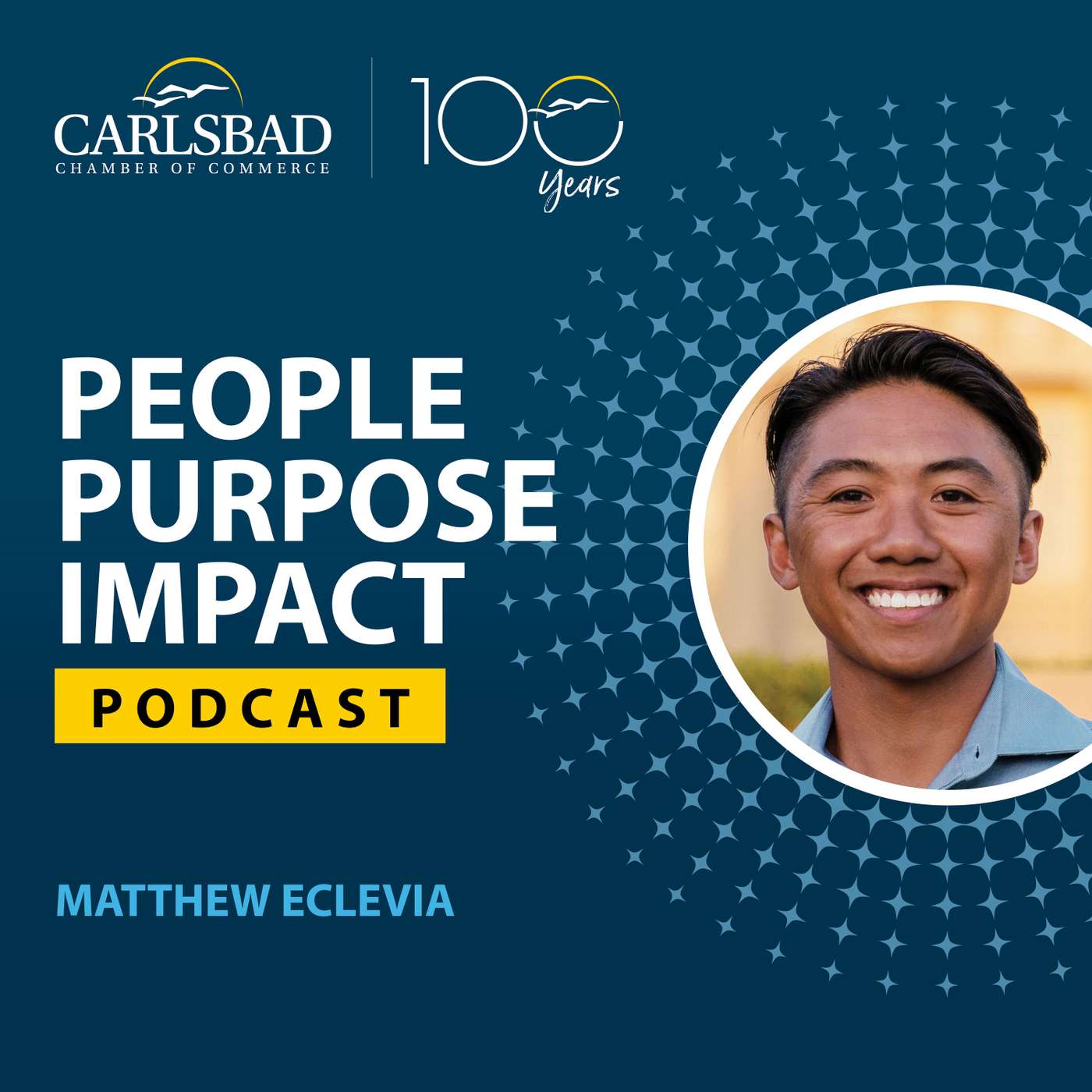


Matthew Eclevia, President of Freehab Therapy, joins Bret Schanzenbach on Carlsbad: People, Purpose and Impact to share how a local nonprofit is changing access to neurological rehabilitation in North County San Diego.
Freehab Therapy is a mobile, pro bono rehab organization designed to fill the care gap many patients experience after discharge—especially those recovering from stroke, spinal cord injury, traumatic brain injury, and chronic neurological conditions like Parkinson’s, MS, and ALS.
Matthew explains why continuity of care (particularly in the first six months) is so important, how insurance authorizations and transportation create major barriers, and why Freehab’s model brings therapy directly to patients’ homes. He also shares the nonprofit’s community-building programs like a hiking group, plus plans for expanded services and future fundraising events.
Learn more or get in touch: freehabtherapy.org
Did this episode have a special impact on you? Share how it impacted you
Carlsbad Podcast Social Links:
LinkedIn
Instagram
Facebook
X
YouTube
Sponsor: This show is sponsored and produced by DifMix Productions. To learn more about starting your own podcast, visit www.DifMix.com/podcasting
Host (Bret Schanzenbach):
Carlsbad: People, Purpose and Impact — an essential podcast for those who live, work, visit, and play in Carlsbad.
Good morning and welcome, everyone. My name is Bret Schanzenbach. I’m the President and CEO of the Carlsbad Chamber of Commerce, and I’m your host.
Today I’m excited to have with me Matthew Eclevia, President of Freehab Therapy. Good morning, Matthew.
Guest (Matthew Eclevia):
Good morning. Thank you for having me.
Host:
Great to have you. Before we get into the meat of rehab therapy—because that’s a unique name—we’re going to learn all about it today. I was looking you up, and it looks like you grew up in Orange County.
Guest:
I did. I grew up in Los Alamitos, California—born and raised. Then I slowly migrated south to Carlsbad, and I’m happy to be here.
Host:
And you went to Chapman for undergrad and your medical training?
Guest:
Yes. I went to Chapman University for undergrad in Health Sciences, and then I did my Doctor of Physical Therapy there as well.
Host:
Nice—Chapman Panther. It looks like right out of the gate you started at Tri-City Medical Center.
Guest:
Yes, and I’m still there. I work in the acute rehab unit. My first experience at Tri-City was during my last clinical rotation in PT school. I had great mentors and wanted to stay, so that’s where I put down roots.
Host:
Why physical therapy?
Guest:
Growing up, I knew I wanted something in the medical profession, but I wasn’t sure what. I was very active and played sports, so I saw what happens when you get injured and go through outpatient rehab.
As I learned more, I realized physical therapy can have a major impact in inpatient and neurological settings too, and that’s what really inspired me.
Host:
At Tri-City, what kinds of injuries do you see most often?
Guest:
A lot of stroke patients, spinal cord injuries, and traumatic brain injuries. We also see general orthopedic injuries, but my unit is mostly stroke and spinal cord injury.
Host:
How do spinal cord injuries happen? People think sports collisions, but what else?
Guest:
Most are traumatic—motor vehicle accidents, sports injuries, falls, stab wounds, gunshot wounds. There are also non-traumatic spinal cord injuries that can happen over time with aging or certain diagnoses.
Host:
So you’re working locally as a physical therapist, then you start a nonprofit—501(c)(3)—called Freehab Therapy. Tell us how that began.
Guest:
The name is a play on “rehab”—I’m big on puns.
In the hospital, I realized that after discharge there can be a gap between the care patients receive in the hospital and when they can start outpatient therapy. With neurological injuries, continuing rehab—especially in the first six months—is critical. Any lapse can impact recovery.
We wanted to fix that gap. One big barrier is insurance authorization delays. But if we provide pro bono services, we don’t have to wait—we can step in immediately as a stopgap so patients continue progressing and can access resources in the community.
That’s where Freehab Therapy came from: pro bono, free rehab.
Host:
On your website, your mission is to create a world where everyone can live a healthy and active life regardless of financial resources. Talk about that.
Guest:
A lot of people can’t access the care that’s available—sometimes it’s cash-pay, sometimes insurance limits, and they get stuck. Our pro bono care helps remove that barrier.
We also offer community programs to help people reintegrate after long hospital stays. We have a hiking group, and we’re working on an art class to incorporate art therapy elements. There are a lot of ways to support people beyond traditional clinic visits.
Host:
What types of patients do you serve through Freehab Therapy?
Guest:
We serve people with neurological injuries and impairments—stroke, traumatic brain injury, neuromuscular conditions—and also chronic neurological conditions like Parkinson’s, MS, and ALS.
Not everyone returns to 100%, and some conditions require ongoing support. What’s unique about us is we’re a mobile clinic—we don’t have a brick-and-mortar location.
That helps because many people are homebound, and transportation is a major barrier. We go to them, in their home or a familiar setting, so we can treat their condition and improve independence.
Host:
So in a nutshell: you come to the patient, not the other way around.
Guest:
Exactly. We’re doing our best to remove every barrier we can.
Host:
What qualifies someone to receive your pro bono services?
Guest:
Our pro bono therapy program includes physical therapy and occupational therapy, and we’re working on adding more speech therapy.
To qualify, they need to be in a gap of care—meaning they’re not currently receiving outpatient services, they may be waiting on insurance authorization, or they’ve exhausted their covered visits. We don’t have resources to serve everyone, so we focus on those without active outpatient therapy.
But even when someone doesn’t qualify, we can often point them to the right resources. People reach out from other parts of San Diego County, Orange County, and even other states. That helps us build connections and refer people to care where they are.
Host:
How long has Freehab Therapy been around?
Guest:
We started in August of 2024—so about a year and a half.
Host:
You’ve already built an impressive team and support network.
Guest:
A lot of support has come from medical professionals who’ve heard about what we’re doing. It speaks to how much this is needed—not just here, but throughout Southern California and beyond. We’ve even received inquiries through social media from other states.
Host:
Your website notes the average cost of a PT session is around $186. Is that accurate?
Guest:
It can fluctuate, but around that is a fair estimate. Out-of-pocket cash-pay can be in the $150+ range, sometimes higher, depending on the provider.
Host:
And you’ve already put in a lot of hours of free care.
Guest:
Yes. Our team is amazing—coordinating care, traveling, and providing services, especially as a newer organization, has been a big effort.
Host:
And because you’re mobile, you’re also covering travel costs.
Guest:
Yes. The mileage number on the site is “1500+” and it’s grown. We’re building the organization not only to support patients, but also to support therapists—making sure they’re reimbursed appropriately for their work and time.
Host:
If someone doesn’t qualify for pro bono care but wants to work with you, do you offer paid services?
Guest:
We do. We have a strengthening/wellness program. Continuity of care matters—people like working with someone they trust, similar to wanting the same dentist or doctor. We’re also working on implementing a sliding-scale model to match people’s financial resources.
Host:
What’s the best way for someone to contact you?
Guest:
Our website is the best place to start. There’s a contact form and our email. The website is freehabtherapy.org.
Host:
Since you provide a lot of free services, how do you fund the nonprofit?
Guest:
We’ve learned a lot as a team about fundraising. Last year we did our first fundraising event—a pickleball tournament in Encinitas—and it was successful.
This year we plan to do the pickleball tournament again and also a golf tournament in San Diego. We’re exploring different ways to raise funds beyond grants and donations.
Host:
As you schedule those, let us know at the Chamber so we can share them on our calendar and social channels.
Guest:
Absolutely. That’s why I’m happy to be part of the Chamber.
Host:
Michael, thanks for coming on and sharing what you’re building. Podcasts have a life of their own—you never know who’s listening.
Guest:
It’s true. Even our website analytics show visitors from places we’d never expect. It’s early, but the support is encouraging and keeps us building.
Host:
Thanks for joining us today on Carlsbad: People, Purpose and Impact. If you got value out of this episode, hit follow on your favorite podcast app and tell a friend. Can’t wait to see you next time.