Building with Intention: Laurie Barron on Digital Strategy, WordPress, and Creative Business
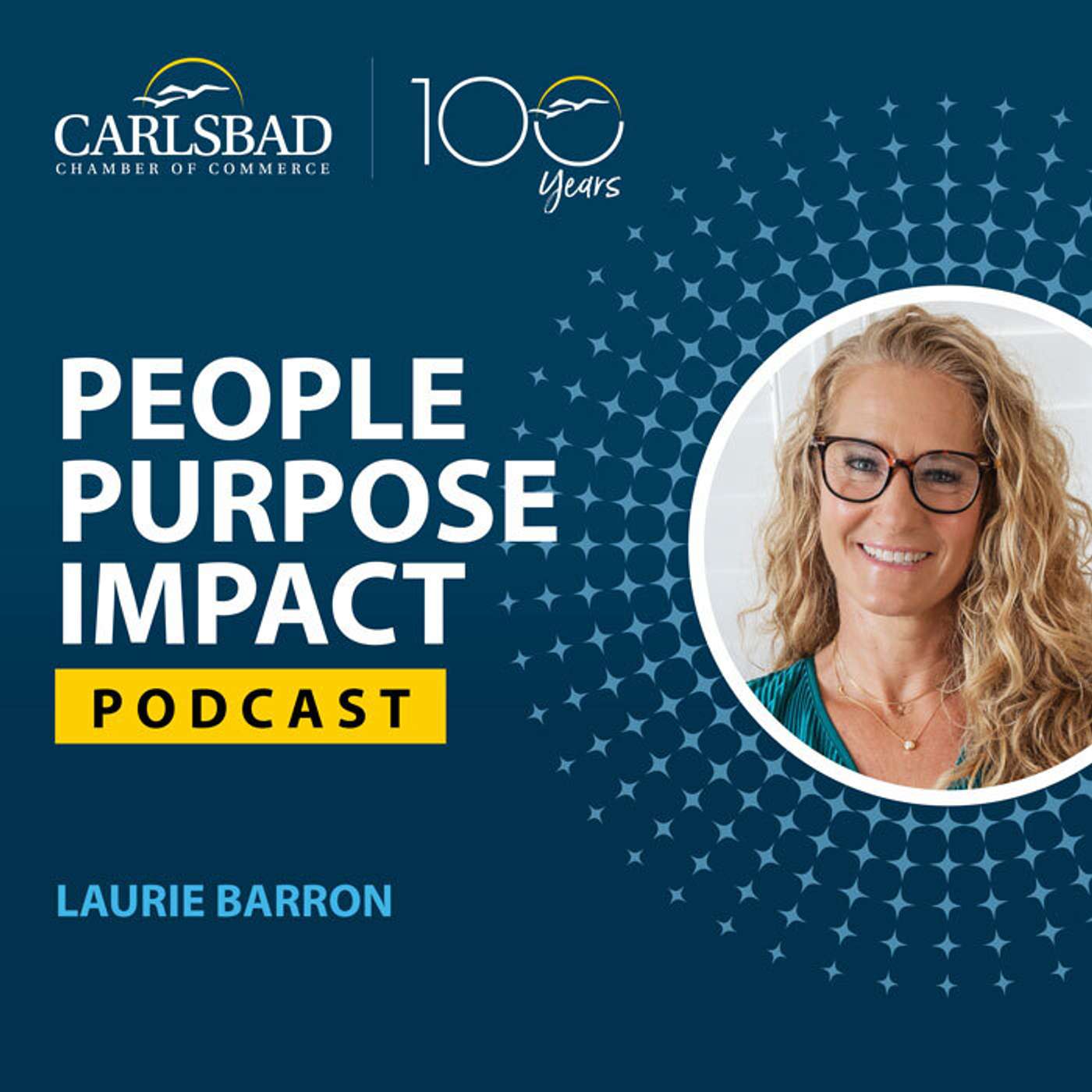






In this episode of Carlsbad: People, Purpose and Impact, Bret Schanzenbach welcomes Laurie Barron, co-founder of Pursu Agency, for a conversation about entrepreneurship, digital strategy, branding, and the evolving world of web development.
Laurie shares her unconventional path from accounting and IT to UX, creative agency work, and eventually building Pursu Agency with her longtime business partner, Betsy. Along the way, she reflects on how her background as a collegiate swimmer and coach shaped her work ethic, discipline, and standards.
The conversation dives into what makes a strong brand foundation, why growth-driven websites matter, how user experience influences digital success, and where AI fits into modern marketing. Laurie also explains why WordPress remains such a powerful platform when set up properly, and why businesses need more than just a pretty website—they need clarity around audience, messaging, and long-term goals.
This episode is a great listen for business owners, entrepreneurs, marketers, and anyone thinking about how to better position their brand online.
Topics covered include:
Laurie Barron’s career journey from accounting to digital creative work
The founding story behind Pursu Agency
Why branding and strategy should come before website design
How user experience and SEO work together
Thoughts on AI tools in marketing and web development
Why WordPress still matters
The importance of client education and long-term partnerships
A personal look at Laurie’s fitness background and her new rescue dog
Did this episode have a special impact on you? Share how it impacted you
Carlsbad Podcast Social Links:
LinkedIn
Instagram
Facebook
X
YouTube
Sponsor: This show is sponsored and produced by DifMix Productions. To learn more about starting your own podcast, visit www.DifMix.com/podcasting
Bret Schanzenbach:
Carlsbad: People, Purpose and Impact is an essential podcast for those who live, work, visit, and play in Carlsbad.
Good afternoon and welcome, everyone. My name is Bret Schanzenbach, and I’m the President and CEO here at the Carlsbad Chamber. I’m your host once again today, and I’m excited to have with me Laurie Barron. Laurie is the co-founder of Pursu Agency. Good afternoon, Laurie.
Laurie Barron:
Hi. How are you doing?
Bret Schanzenbach:
I’m well. How are you?
Laurie Barron:
I’m good. It’s like 80 out today, so it doesn’t get much better than that. It’s crazy.
Bret Schanzenbach:
These Santa Anas.
Laurie Barron:
My daughter and her kiddos are visiting from Idaho. They live in the Boise area, and of course they were hoping for good weather. But with the Santa Anas, there’s not much humidity. She has low humidity where she lives, so she was looking forward to a little more humidity.
Bret Schanzenbach:
Not here. Not right now with these Santa Anas going.
Laurie Barron:
Crazy weather. I love it. I like to take screenshots of the weather forecast and send them to my family back home in Ohio.
Bret Schanzenbach:
Ohio. But then you also went to college in Indiana.
Laurie Barron:
I did. I’m a Hoosier. I won’t go there about this year’s season, but that was super fun. We have to relish it a little bit. What a season. It was crazy. I actually connected with the San Diego IU alumni group, so that was really fun. It felt like a little piece of home.
Bret Schanzenbach:
I had heard that one of the tactics the university used back in the day was that if you wanted a shot at basketball season tickets, you had to have football season tickets too.
Laurie Barron:
That’s funny. I don’t remember that. I actually worked at the NCAA for seven years doing accounting. I was kind of an accounting and computer liaison there, so college sports have been a part of my life. I also swam at Indiana University. Swimming actually has more national championships than basketball, I think, so it’s a great sports school. Anybody who went to IU is kind of obsessed with the school. It’s just an amazing, beautiful place.
Bret Schanzenbach:
Using that to transition into your background, I noticed you started out in accounting.
Laurie Barron:
I did. I studied accounting and computer information systems at IU, and then my graduate work was in human-computer interaction. At the time, that was kind of a newer field. Today it’s more commonly referred to as user experience, or UX and UI. It included a lot of psychology and how people interact with technology.
That was in the early 2000s, so while the technology has changed dramatically, a lot of the psychology remains the same—how we read, how we interact, how we respond. Of course now, with AI, everything is evolving even faster.
After that I did accounting at the NCAA, along with some IT liaison work and systems work. I don’t love accounting, but it is fundamental for running a business.
Bret Schanzenbach:
It certainly doesn’t hurt having that background as you move into entrepreneurial ventures. And even before the NCAA, you started at one of the biggest firms.
Laurie Barron:
I did. I started at PricewaterhouseCoopers in Columbia, South Carolina, and did the classic two-year turnaround there. I still maintain some contacts from that time. It was a great group, but it wasn’t really my personality. I’m way too extroverted to be an auditor walking into banks, mortgage companies, and agricultural lenders. Auditors aren’t exactly the most popular people when they show up, so that wasn’t much fun for me.
I learned a lot, though. It was great exposure to different industries and a valuable first job out of college. My background is a little eclectic, but I’m an entrepreneur at heart. I’m a jack of all trades, I have a lot of interests, and I really enjoy the challenge of learning all aspects of a business.
Bret Schanzenbach:
As a chamber person, I love seeing somebody with that kind of fun, eclectic background. At one point you were also very connected to Hera Hub.
Laurie Barron:
I used to be, yes. I’m not a member anymore, but it was an amazing platform for me. I started as an ambassador there and worked in the office on Fridays. I met a lot of really great people and did one of their accelerator programs with Silvia. It’s such a supportive group. It’s not just a place to co-work, but really a place to collaborate, learn, and grow.
Bret Schanzenbach:
We love having them next door here and collaborating with them. You also mentioned your background as a collegiate swimmer, and fitness is still a big part of your life.
Laurie Barron:
Yes, absolutely. I’ve been coaching a masters swim program for ten years. Masters swimming is basically organized lap swimming for adults. Some people compete, some don’t. I coach technique and workouts, but I don’t compete anymore. After swimming at that level in college, with two-a-days and six miles a day, I don’t want that pressure anymore.
Now it’s my therapy. It keeps me motivated, gets me in the sunshine, and gives me balance. I also coach another fitness program called Immerse, which is part of Deep End Fitness. It combines land and water workouts and has a little bit of a military-style training element.
Even though my own intensity is lower than it used to be, that discipline is still very much part of who I am. Swimming is such an intense, structured sport, and I think it shaped my standards, discipline, and sense of responsibility.
Bret Schanzenbach:
Talk us through your transition into digital marketing and how you eventually landed at Pursu Agency.
Laurie Barron:
Pursu is a digital creative agency, so we specialize in digital marketing, branding, and web design. My transition into this world really came from wanting to get out of accounting and recognizing that I was good at the tech side of things. I’m also very creative and have a good eye for design.
I started out working with agencies, helping them turn over websites, and then I quickly learned WordPress. I was with a great agency at the time, and that’s where I met my partner, Betsy. She was the graphic designer there, and we connected because we both had white German Shepherds at the time.
We worked independently together for years, and eventually decided it made more sense to build one company together. Before that, it felt disjointed. She was billing clients, I was billing clients, and scopes were coming from different places. Creating one company just made it more cohesive.
Over the years, we’ve also curated a strong team of contractors—SEO specialists, copywriters, marketers, and developers—people who share our values and our quality standards. That’s allowed us to build larger, full-scale projects with the right support behind them.
Bret Schanzenbach:
Listening to you talk about creativity and tech, the accounting background feels like such a misfit.
Laurie Barron:
I know. But coding and systems work are very left-brained too, like accounting. And even though I do have the creative side, understanding structure, systems, and how things connect is a big part of what I do.
I don’t code as much anymore unless we’re doing a custom build, because I have a team of backend developers. But one thing I’m especially good at is taking a design and understanding how to bring it to life in a functional way. I also understand how SEO affects design and content, so I can see how everything fits together.
Betsy and I know each other so well that our workflow is really dialed in. She creates the design, and I can usually extrapolate it across the full website without needing much guidance.
Bret Schanzenbach:
On your website, you talk about building a growth-driven website and an unstoppable brand with intensity and intention. I liked that. Talk about it.
Laurie Barron:
Thank you. We really believe the brand sets the foundation. We go through strategy, research, audience clarity, competitiveness, and user experience. That’s something that really separates an agency from simply hiring independent contractors. We’re looking at the ideal client, how the audience interacts with the site, what tools are needed, and how the user experience evolves over time.
Growth comes from understanding behavior, using data, and making tweaks over time. Businesses change. Products change. Audiences shift. Sometimes a niche finds the business, and then the business has to adapt. We want to build relationships from the beginning so we can stay involved long term, not just build it and disappear.
We want to understand your audience, how to market to them, and how to integrate the right tools for lead capture, conversions, payments, and whatever else supports your goals. Those goals may change over time, so we want to build the foundation in a way that allows the website and brand to grow.
We also use a tech stack that makes expansion easier. We implement the right tools from the beginning so clients can grow without having to rebuild piece by piece later. It’s hard to start with one page and stretch it over time if the foundation isn’t right.
Bret Schanzenbach:
Of course, we can’t talk digital marketing without talking about AI. We also have to think now not just about SEO, but how AI tools find your website and content. Talk about that.
Laurie Barron:
A lot of that is more in the arena of our marketing and SEO experts, but from my understanding, many of the core principles still apply. SEO is still important, and now we also have to think about optimization for AI tools too.
As for how we use AI, we really see it as a tool, not the finished product. There are so many platforms now that promise you can build a website in 90 seconds, and technically you can. But that’s not really our audience. If you need something up quickly, great—but it’s likely going to look like everyone else’s, and it won’t have strategy behind it.
For serious businesses that want their website to actually do something for them, there still needs to be guidance, integration, content structure, and strategy. AI is incredibly useful for things like email marketing, campaign drafts, blog writing, and website copy. But the quality of the output depends a lot on the quality of the input.
If you don’t know how to prompt for something in a way that aligns with SEO or your goals, you might still get something that sounds good, but it may not perform. So yes, it’s a fantastic tool, but expertise still matters.
Bret Schanzenbach:
Let’s shift to a more technical topic. You mentioned WordPress. I’ve been using WordPress for 15 years or so. Is it still a great platform for website development?
Laurie Barron:
Yes, absolutely. I’m curious what your experience has been, but from my perspective, WordPress is still a great platform. It powers a huge portion of the internet, and the biggest advantage is that it’s such a well-supported ecosystem. If you want to build something, there’s probably already a plugin or a resource that can help you do it.
That’s what makes it so good for growth. It can do almost anything, and if you need custom functionality, there are many ways to achieve it without reinventing the wheel. Some resources are free, some are paid, but the flexibility is tremendous.
That said, it’s only as good as the setup. If you choose a bad theme, install incompatible plugins, or use poor hosting, the site can become insecure or unreliable. So success with WordPress really comes down to building it properly from the beginning.
I also train my clients on how to use their site, because I want them to feel empowered to make simple edits themselves. They shouldn’t need to wait on me to fix a typo or add a period.
Bret Schanzenbach:
That makes total sense. And because WordPress is so widely used, if somebody loses the team that built their site, they can usually find someone else to help them.
Laurie Barron:
Exactly. That’s another huge benefit. If someone comes to me with a very obscure platform, there may be almost no one left who supports it. That can leave people stuck. With WordPress, there’s a whole community of professionals who know how to step in and help.
Bret Schanzenbach:
You can work with pretty much any type of business, right? You’re not niched into one specific industry.
Laurie Barron:
We’re not. A lot of our work has been with professional services—lawyers, construction companies, doctors, healthcare groups, and some nonprofits. That’s naturally found us over time. I don’t love e-commerce as much because it tends to be more cumbersome and plugin-heavy, but we’ve done some of it.
Industry-wise, though, we’re not limited. We have a standard process that works across sectors. We help clients get clear on their audience, their ideal clients, and how to speak to them. One of the biggest shifts we help people make is moving their content away from just “this is what I do” and toward “this is what you, the client, gain.”
That user-focused mindset affects not just the website, but how people talk about their business everywhere—at networking events, trade shows, sales conversations, wherever. So a lot of what we do becomes consulting as much as design and development.
Bret Schanzenbach:
That’s great. So Pursu is the company you created with your partner Betsy. You each had your own companies before combining into one. How did the name come about?
Laurie Barron:
Yes, I had my web development company, and Betsy had Heavens to Betsy Design. We eventually combined into one company. We liked the word “Pursu” because it felt action-oriented. It’s about what someone wants to Pursu—freedom, growth, a new business, more revenue, whatever it is.
We ended up spelling it without the final “e” because we had different ideas about whether we wanted it to sound more like a verb or a noun, and that felt like the right middle ground. But at its core, we liked that it reflected movement, intention, and action.
Bret Schanzenbach:
And because you’re in web design, you can work with clients pretty much anywhere in the world.
Laurie Barron:
Anywhere. Betsy is actually in Virginia. Her husband is a Marine, so they moved every few years and are now settled on a beautiful property there. We’ve basically been bicoastal forever. In fact, I think we’ve only met in person twice, which sounds crazy because we’re incredibly close. But we’re in constant contact and have built a very strong partnership that way.
Bret Schanzenbach:
So for people hearing about Pursu Agency for the first time and thinking they need to talk with you, where should they start?
Laurie Barron:
The best place is our website, Pursu.agency. From there, you can book a free consultation with us. We also have a lot of helpful resources on our blog and insights page, including things people should know when choosing the right developer or agency.
That’s something I really care about. We may not be the right fit for everyone, and that’s okay. But I want people to know the right questions to ask and understand what they’re getting into when they hire any agency or contractor.
Bret Schanzenbach:
That’s awesome. Before we wrap up, I know you also have a relatively new dog at home.
Laurie Barron:
I do. She’s a one-year-old shepherd, boxer, Australian cattle dog, white shepherd mix. I lost my white shepherd-collie mix two weeks ago, and that was really painful. I had to refill that hole in my heart quickly. I also have two cats, so I’ve been joking that I’m living with Josie and the Pussycats.
She’s been such a great transition. She’s actually a little afraid of the cats and runs under the crate. I got her through German Shepherd Rescue of Orange County, and I’m just so happy I have her right now. She’s restored so much energy in the house.
Bret Schanzenbach:
If we don’t see you at the next networking event, we’ll know why.
Laurie Barron:
Exactly. I’ve only had her for less than a week, so I’m just leaving her alone for little bits of time right now. But she’s doing amazing. I’m very proud of my puppy.
Bret Schanzenbach:
You absolutely can be. Well, thank you so much for taking the time to come down and share about Pursu Agency and all that you do. We love having you in our chamber, and thank you for being part of our community.
Laurie Barron:
Thank you. I appreciate it. My pleasure.
Bret Schanzenbach:
Thanks for joining us today on Carlsbad: People, Purpose and Impact. If you got value out of today’s episode, please hit the follow button on your favorite podcast app, and please tell a friend. Can’t wait to see you next time on Carlsbad: People, Purpose and Impact.