Beyond the Bottom Line: Building Community Through Corporate Impact
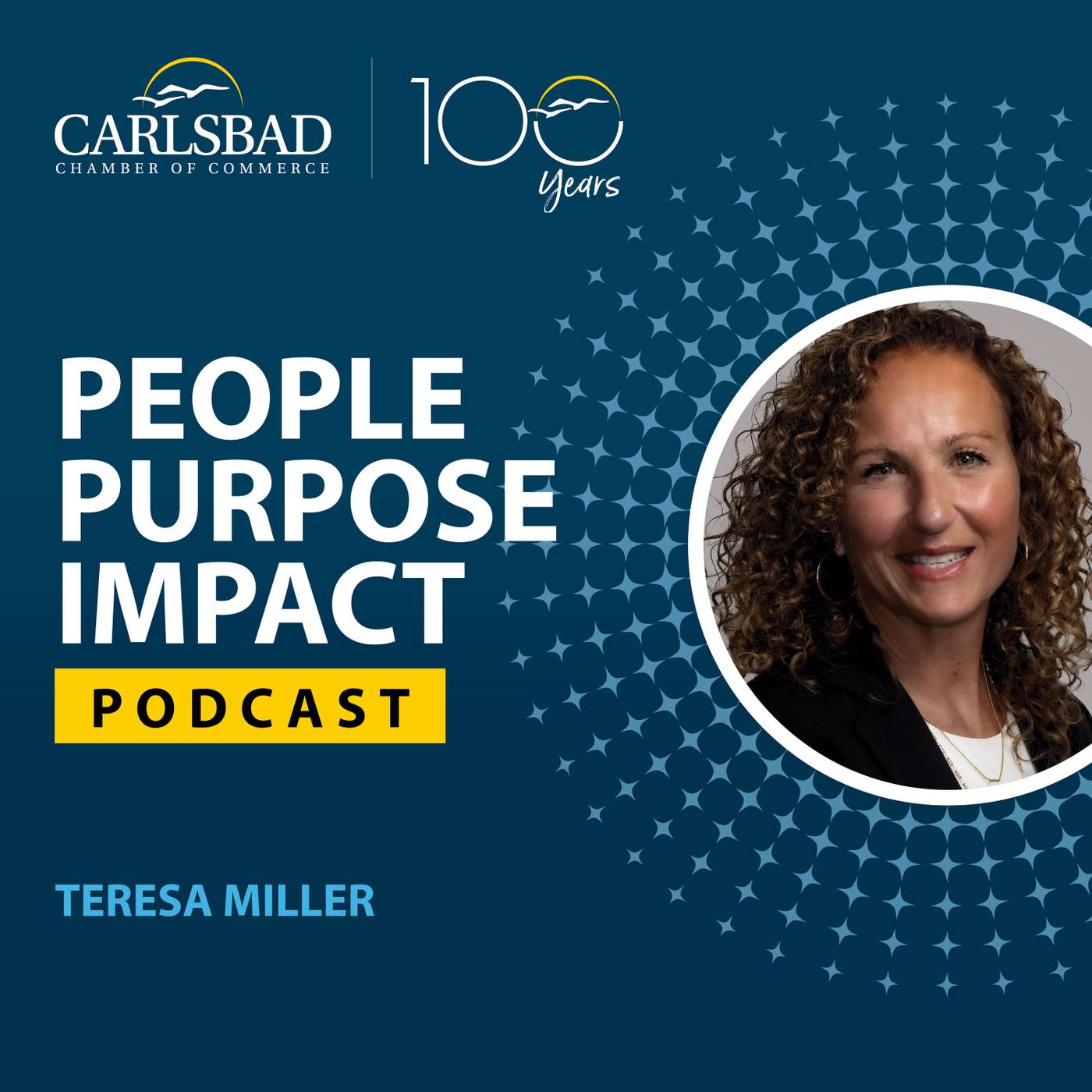


Host Bret Schanzenbach sits down with Teresa Miller, Founder and CEO of 365 Connect, a purpose-driven 501(c)(3) that helps companies build meaningful corporate social responsibility (CSR) programs through employee engagement and volunteerism.
Teresa shares her New York upbringing rooted in service, her journey through sports marketing and adaptive sports, and how a parent’s introduction to CSR sparked the creation of 365 Connect. She breaks down CSR’s four pillars (financial, ethical, legal, philanthropic) and explains how 365 Connect primarily supports the philanthropic arm through strategic volunteer programming.
A standout example is their work with Home Depot—locally supporting veteran and military initiatives (including Purple Star schools) and nationally leading large-scale community builds like post-disaster renovations in Asheville to create transitional housing for displaced veterans. Teresa also highlights why in-person volunteering “humanizes” impact, boosts employee retention and morale, and strengthens brand trust with customers.
Did this episode have a special impact on you? Share how it impacted you
Carlsbad Podcast Social Links:
LinkedIn
Instagram
Facebook
X
YouTube
Sponsor: This show is sponsored and produced by DifMix Productions. To learn more about starting your own podcast, visit www.DifMix.com/podcasting
Host (Bret Schanzenbach):
Carlsbad: People, Purpose and Impact—an essential podcast for those who live, work, visit, and play in Carlsbad.
Good morning and welcome, everyone. My name is Bret Schanzenbach. I’m the President and CEO of the Carlsbad Chamber of Commerce, and I’m your host today. I’m pleased to have with me Teresa Miller. Teresa is the Founder and CEO of 365 Connect. Good morning, Teresa.
Teresa Miller:
Good morning.
Host:
How are you?
Teresa:
I’m well. Thanks for having me.
Host:
Thanks for joining me. I know you’re a New York native, and you’re one of five kids—the youngest. One thing you shared with me that really shaped your upbringing was giving back. Tell me how that showed up in your family when you were a kid.
Teresa:
I’m the last of five. I have an older sister and three brothers, and we were told early on that giving back to your community wasn’t an option—it was an obligation. I grew up Catholic, so we gave through the church. My parents had us making sack lunches, and we’d go around neighborhoods handing them out. We talked about giving back around the dinner table, too.
I’m really grateful to my parents. My father was born in Italy, my mother was born here, and our grandparents came over together. Along with tradition and culture, they instilled that giving back matters.
Host:
That’s wonderful. You came to California around 1989, right?
Teresa:
Yes—1989. I had a cousin here and wanted a change. She said, “Come live with me for a few months.” And I never went back. It’s been 34 years.
Host:
What’s not to love? Before 365 Connect, you had an interesting professional journey—adaptive sports, Hands On San Diego, sports marketing. Walk us through your path before founding 365 Connect.
Teresa:
Back in New York, I had an amazing job with the International Olympic Committee, and I loved it. When I moved here, a mutual friend who worked for the NFL helped me get informational interviews. Through that, I met my now-husband, and we founded ICM Sports. We ran it for about 21 years—sports marketing, sponsorship sales, celebrity golf, everything like that.
During that time, I also did contract work with adaptive sports, which has my heart. I worked with kids with disabilities and helped run sports camps and programs like wheelchair basketball.
Later, I got into an organization focused on community engagement, and that really sparked my interest in this industry.
As my kids grew up, giving back started early—five or six years old. Kids can make sandwiches, so we started with youth volunteerism. I organized thousands of events through our school. One day, a parent asked me, “Have you heard about corporate social responsibility?” I hadn’t. Once I researched it and saw how it aligned with our mission, that’s when we created 365 Connect.
Host:
So what exactly is 365 Connect, and how does it work?
Teresa:
We’re a 501(c)(3). We’re purpose-driven, and we work through employee engagement and volunteerism to create positive change in our communities. We believe volunteerism is the glue that keeps families together.
Corporations are investing more in CSR programs so employees can give back. We create volunteer engagement programs and social impact programs as part of an overall CSR strategy.
Host:
To make that tangible, you’ve done a lot with Home Depot nationally. Explain what corporate social responsibility looks like in real life using Home Depot as an example.
Teresa:
Home Depot is one of our larger clients, and I love talking about them. They brought us into this space, and they’re also a model for what CSR looks like when it’s done well.
We work with them locally and nationally. Locally, we work with retail stores and associates. Here in Southern California, we help get their associates out into the community. We provide grant funding through the foundation and support projects like veteran home renovations, upgrades for military families, and giving to veteran and military nonprofits. We also work with Purple Star schools—school beautification and needs-based projects. About 75% of our work with Home Depot is veteran and military focused.
Nationally, we travel with them for large-scale builds—anywhere from 200 to 800 volunteers. We’ll renovate entire communities if needed. A recent example: we went to Asheville after Hurricane Helene. A nonprofit partner bought a Quality Inn to convert into veteran housing. We went in with 600 volunteers and renovated it—painting, landscaping, flooring, whatever was needed—so displaced veterans could move into transitional housing.
They also do a great job engaging vendors, measuring impact, and tracking metrics. We bring that approach to other corporations locally and across the country.
Host:
You also talk about the four pillars of CSR. Share those.
Teresa:
CSR—corporate social responsibility—is becoming integral to how companies do business. It blends purpose with impact and gets employees involved.
The four pillars are:
1. Financial — a company has to be profitable.
2. Ethical — do what’s right for the communities you serve.
3. Legal — follow rules and regulations.
4. Philanthropic — giving back to society.
We operate mainly in the philanthropic pillar, which includes funding nonprofits and employee volunteerism.
We go into companies, talk strategy—what they want to accomplish, what causes they want to support—then build a plan designed for long-term results, not just a one-off event.
Host:
There are so many benefits when a company embraces this. One is talent—people want to work for companies that give back.
Teresa:
Absolutely. People want to know their work is about more than making a buck. Younger generations coming into the workforce look for companies making an impact. Their giving is different than their parents’—they want to shape what it looks like and how they participate.
It’s also humanizing. When employees volunteer together, they build camaraderie and see the change firsthand.
When we started, it was right when COVID hit, and companies asked about virtual volunteering. I said no, because our goal is to humanize the connection between the employee and the person being helped. Virtual is great for some CSR work, but what we do is best experienced in person.
When we do large-scale community builds, we jump in too—sometimes 20 projects in a day within four hours. There’s a proverb I love: “Tell me and I forget. Show me and I might remember. Involve me and I will understand.” When you’re involved and you see the impact right there, you understand the mission differently. That’s what our corporate partners feel too.
Host:
And customers also like supporting businesses they know are giving back.
Teresa:
One hundred percent. It enhances brand reputation. People have choices where they spend their dollars, and they want to support programs doing good in the community. We’re seeing companies become more strategic about reinvesting profits back into impact programs.
Host:
Some listeners might think, “I’m not Home Depot.” Is there a minimum company size to work with you?
Teresa:
There’s really no size requirement. We work with small, medium, and large companies—from about 25 employees to 20,000.
With smaller companies, we help them start: What causes matter to your employees? What does employee engagement look like? Do you have a volunteer program? Some don’t know how to begin, so we guide them. We’ll often work with a company for a year to build the foundation. Some stay with us long-term, like Home Depot. Others become self-sufficient and run their own programs.
We see ourselves as a fractional CSR department for companies that don’t have one internally.
Host:
You’re based in San Diego County, but you can build programs anywhere.
Teresa:
Yes. When companies have conferences in other cities and want to do something for the local community, they call us. It could be animal welfare, social justice, veterans and military, youth—anything. We’re always looking for new ways to keep clients engaged.
This year, we’re also working on local surveys to measure the impact and ROI of volunteerism—both for corporations and nonprofits. For nonprofits: how much money are you saving through volunteer support? For corporations: what are employees asking for, how do engagement numbers compare nationally, what causes do they support, how much do they raise? We want to provide useful data and benchmarks.
Host:
If someone’s hearing about this for the first time and wants to explore working with you, how should they reach out?
Teresa:
They can go to our website and send a message, or message me on LinkedIn. My email is theresa@365-connect.org, and our website is 365-connect.org. We’re currently revamping the site and telling more impact stories.
Host:
You’re a sports fan too, right? And your kids are all over the country now?
Teresa:
Yes! I have one son in New York City, one in Austin, and my daughter is a sophomore at Alabama. I’m a big SEC fan—football and basketball. I’ve been a sports fan my whole life.
Host:
Teresa, thank you for sharing your mission. We love having you as part of our chamber, and I hope more companies engage with your work—because that means we’re making the world a better place.
Teresa:
Thank you so much for having me. I hope companies reach out. We need to come together in these crazy times and help each other.
Host:
Amen to that. Thanks again.
Thanks for joining us today on the Carlsbad: People, Purpose and Impact podcast. If you got value out of today’s episode, please hit the follow button on your favorite podcast app, and tell a friend. Can’t wait to see you next time on Carlsbad: People, Purpose and Impact.
